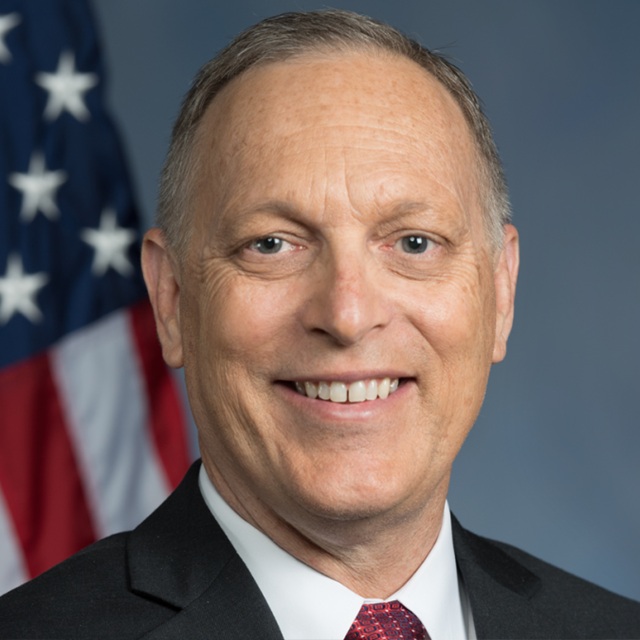
 Rep. Andy Biggs, R-Ariz. Credit: Biggs
Rep. Andy Biggs, R-Ariz., has added an employee health benefits package to the pile of bills now involved in the Affordable Care Act premium subsidy fight.
The new "Putting Patients First Healthcare Freedom Act" bill would not extend the current ACA premium subsidy levels, but it would let the federal government hold down the cost of coverage by funding another ACA subsidy program, the cost-sharing reduction subsidy program, which helps low-income users of individual and family coverage pay plan deductibles and coinsurance bills.
The Biggs bill also includes many items that have been on employers' and benefits advisors' wish lists for years, according to a copy of the text posted by Biggs.
Some of the sections of the Biggs bill are based on provisions that were cut out of an early version of the One Big Beautiful Bill Act.
Some of the health account provisions brought over from the early OBBBA draft would, for example, let people roll assets from terminated flexible spending arrangements into health savings accounts and let one spouse contribute to an HSA even if the other spouse has a health HSA.
The Biggs bill also includes the CHOICE Arrangement Act, another health account provision cut out of OBBBA. The CHOICE Arrangement Act would reboot the individual coverage health reimbursement arrangement program — a program that lets employers provide cash that workers can use to buy their own individual health coverage.
The Biggs CHOICE provision would change the name of ICHRAs to "custom health option and individual care expense" arrangements, or CHOICE arrangements, and make some other changes in rules that would make the arrangements more attractive and easier to administer.
Biggs introduced the bill Tuesday, around the same time that Senate Majority Leader John Thune said the Senate would vote Thursday on a Democratic proposal to extend the current ACA premium subsidy level and at least one Republican bill.
What it means: Introduction of the Biggs bill shows that the ACA premium subsidy fight could have hard-to-predict effects on employee health benefits legislation in Congress.
Senators could add amendments to any subsidy legislation considered on the Senate floor, and the House members could add provisions while a package is moving through the House Rules Committee.
The backdrop: Members of Congress are cranking out health bills now because of lawmakers' efforts to keep families from falling off an "Affordable Care Act subsidy cliff" Jan. 1, 2026.
Starting in 2014, the ACA made premium tax credit subsidies available for people with income under 400% of the federal poverty level who bought individual or family health coverage through HealthCare.gov or another ACA public exchange program.
When the COVID-19 pandemic hit, Congress made the subsidies more generous and made the subsidy levels available to families at any income level of the families' share of the bills exceeded about 9% of their income.
The temporary COVID-related subsidy increase is set to end Dec. 31.
KFF has predicted that the expiration will cause what the typical exchange plan user pays for coverage out of pocket to double in 2026.
For some families with income around 450% of the federal poverty level, the subsidy boost expiration means out-of-pocket costs for health coverge could increase to more than $50,000 per year, from less than $6,000 this year, according to estimates families have been posting on the internet.
The Biggs bill: The Biggs bill includes many provisions affecting public health programs and ACA subsidies in addition to the CHOICE provision.
Biggs bill employee benefits provisions would:
◆ Let people use HSA distributions to pay for health insurance.
◆ Help employers use association health plans to team up to buy health coverage.
◆ Block states from regulating medical stop-loss insurance as health insurance coverage.
◆ Increase the maximum duration for short-term health insurance policies to 10 years, from three months today.
The bill has no cosponsors.
Biggs also has sponsored an ACA repeal bill and as the cosponsor of a prescription drug cost bill.
The Fitzpatrick bill: Rep. Brian Fitzpatrick, R-Pa., contributed to the ACA premum site fight proposal pile Tuesday by introducing the "Bipartisan Health Insurance Affordability Act" bill.
The Fitzpatrick bill, which has 11 Republican cosponsors and four Democratic cosponsors, focuses mainly on provisions related to individual health coverage and public health programs, such as a provision that would extend the current ACA premium subsidy levels through the end of 2027.
The bill also includes a provision regulating pharmacy benefit managers' services for Medicare and Medicaid plans.
The public health plan PBM provision appears to be similar to a public health plan bill that Sen. Mike Crapo, R-Idaho, the chairman of the Senate Finance Committee, and Sen. Ron Wyden, D-Ore., the highest ranking Democrat on the committee, introduced Dec. 4.
The Crapo-Wyden public health plan PBM bill, in turn, resembles a public health plan provision that was in an early version of the One Big Beautiful Bill Act.
In addition to including a public health plan PBM provision, the Fitzpatrick bill includes a section resembling an employer health plan PBM bill that was cut out of OBBBA.
The employer plan PBM provision in the Fitzpatrick bill would require PBMs that work with employers to give the employers detailed tracking reports and require the PBMs to pass all rebates negotiated for employer plans on to the employer plans.
Other ACA subsidy fight proposals: Some of the other ACA fight bills introduced, or announced, include:
A bill introduced by Sen. Chuck Schumer, D-N.Y., who leads the Democrats in the Senate, that would extend current ACA premium subsidy levels through the end of 2028.
A bill announced by Sens. Bernie Moreno, R-Ohio, and Susan Collins, R-Maine, that would extend high subsidy levels for three years, limit eligibility to households with income under $200,000, and set the enrollee's minimum share of the premiums at $25 per month.
A bill introduced by Rep. Jeff Van Drew, R-N.J., that would extend the current subsidy levels through the end of 2027 and limit eligibility to households with income under 700% of the federal poverty level. This year, the limit would be $225,050 for a family of four in most of the country.
A bill introduced by Crapo and Sen. Bill Cassidy, R-La., that would let the current ACA subsidy levels expire, provide funding for the ACA cost-sharing reduction subsidies and provide federal HSA contributions for low-income and moderate-income people. Eligible people ages 18 to 49 could get $1,000 in HSA payments and people ages 50 to 64 could get $1,500.
© Arc, All Rights Reserved. Request academic re-use from www.copyright.com. All other uses, submit a request to TMSalesOperations@arc-network.com. For more information visit Asset & Logo Licensing.