 Brokers will, in essence, be the televangelist of health care reform, spreading hope and stoking the fires of change among their clients.
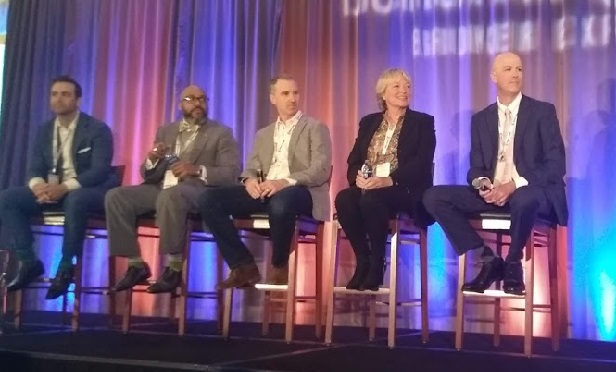
What will the health care and benefits industry look like five years from now? Perhaps there's no better group of people to ask than our Broker of the Year finalists, five individuals leading the charge of disruption and reform in the industry. Where are they taking us? Or rather, where are we taking ourselves?
“It takes a movement of many of us saying the same thing and going in the same direction,” Kareim Cade of Great Lakes Benefits Group said in a panel Q&A before the Broker of the Year announcement the BenefitsPRO Broker Expo in Miami. “It's being bold–bold enough to say this is wrong and things need to be fixed, and not apologizing for that.”
Tim Doherty of Pinnacle HR Solutions and the 2019 Broker of the Year emphasized the need for a collective movement. “When you think about folks in this room, everyone's changing the conversation,” he said. “That increases validity and credibility. The more folks in my marketplace being disruptive, it helps everybody.”
One area not to look toward for disruption in the coming years: government legislation. ”We are in a position of somewhat stagnated stalemate for the next three to five years,” said GDP Advisors' Seth Denson. ”After that my crystal ball is fuzzy. But we'll see [on the employer side] what we're seeing today: more people stepping up, more people rising and saying, 'this isn't working.' The more of us step up, the more that crystal ball can become clearer.”
Related: Out on a limb: Predictions for the benefits industry in 2019
Echelon Group”s Doug Hetherington shared an anecdote of a phone call he was part of shortly after President Trump's election. Since its passage, the speaker said, the ACA had relied on the government to give it value. Now, it's shifting to the free market, where brokers, employers and other stakeholders will decide what direction health care reform takes. “We have a massive opportunity over the next five years to truly impact health care,” Hetherington said. “Not just the financing, but the actual health care system.”
There was a lot of emphasis on this free-market system, the idea that a health care system ruled by supply and demand, price transparency and true consumer choice. “I would love to see us get everybody's hand out of the cookie jar,” said Wanza Schweiger of Benefits Innovations, referring to the convoluted pharmacy supply chain. “It's ridiculous, the pharmacy side. We have to figure out, find a cleaner way to get through it. It comes from knowing what it actually cost.”
As the business model of health care shifts, the broker role will change accordingly. “Five years from now, you're going to see more people positioning themselves as business advisors and not brokers,” said Tim Doherty of Pinnacle HR Solutions, our Broker of the Year.
As business advisors, brokers will help employers create health care strategies, taking advantage of a growing network of new resources and solutions. “We'll see more movement away from traditional insurance carriers, networks will start to disappear because there are more creative solutions out there,” Schweiger added.
Brokers will, in essence, be the televangelist of health care reform, spreading hope and stoking the fires of change among their clients. “More employers will take to the streets and say enough is enough,” Cade said. “That's when we have a revolution. As we continue to make a demand on the employer level, demand on change, that's what we'll see happening.”
Read more of our Expo coverage:
© Arc, All Rights Reserved. Request academic re-use from www.copyright.com. All other uses, submit a request to TMSalesOperations@arc-network.com. For more information visit Asset & Logo Licensing.