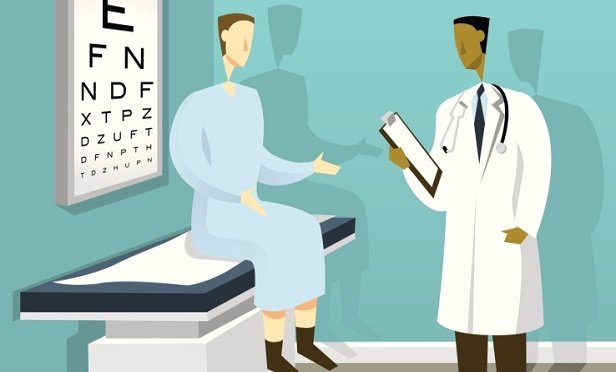
 Beyond confusion about plan coverage and the inconvenience of taking off, for many employees, a lack of trust in the level of care they will receive presents a major barrier to accessing care.
How often do you go to the doctor for your own needs? Probably less than you'd like to admit. I know that, for a long time, I should have gotten my health checked on much more frequently. Instead, I'd convince myself to power through times of pain or discomfort until it was too late — and a small problem became one that couldn't be ignored.
But why? Probably because doing nothing about a (seemingly minor) health issue often feels like the easier option. And when I talk to the people in my life, that's a commonly shared sentiment. It's safe to assume your employees feel the same way. In fact, we don't have to assume. Eighty percent of employees use few, if any, medical services in a year.
It's not because people don't have health problems to address. Despite paying more for health care, the U.S. has lower life expectancy and higher rates of disease burden than other wealthy countries. Considering most health care coverage in the U.S. is provided through employers, it's our responsibility — and opportunity — to improve the health of our people.
When it comes to health care, employers have a lot of room for improvement in (1) helping employees prioritize it and (2) equitably delivering it.
Getting employees to take care of themselves is hard
Back to my earlier point. People choose not to go to the doctor because it's easier. Easier than what, exactly?
Well, easier than reaching out to HR to ask where you can access the list of in-network health care providers and available treatment options. Easier than scouring your inbox from two years ago to find the login information for your benefits platform, and then going through a frustrating process asking for multiple authentications, on multiple devices (including four or five CAPTCHA prompts), just to change your password and finally log in.
Easier than taking half a day off — while your work piles up — to get to the doctor's office, to tell your life story to a physician who barely knows you; to then paying what seems like too much for such an inconvenience; only to then spend more time, and miss more work, going through the same process to see a specialist; and then finally make a trip to the pharmacy.
It can be easy for business leaders to forget that these challenges to seeking help apply to everyone in the organization — especially if they too fail to prioritize their own health. But confusion around available options for care and inconvenient steps to seeking intervention are really only two parts of a three-pronged issue. For many employees, a lack of trust in the level of care they will receive presents a host of other barriers.
Employees face health care disparities
A study by McKinsey found that workers at large U.S. employers, even those earning high salaries, still face health care disparities among diverse talent groups. From the report, on average, diverse employees were less likely to say they had received the mental and physical health care they needed — resulting in 30% or more saying they had considered switching employers due to their health benefits.
Additionally, a lack of trust in the level of care one will receive can come directly from their workplace culture. Even if a medical professional doesn't judge an employee for experiencing symptoms such as depression or anxiety, the culture at work might. One recent study found that almost half of employees who opened up about their mental health faced repercussions such as being passed over for career opportunities or being labeled as "overly emotional."
These negative outcomes push employees away from getting the care they need, which leads to an unhealthy workforce, decreases in productivity and employees who are more likely to quit.
Digital intervention can overcome human limitations
Technology can equip employers to address two key needs to help employees prioritize their health and deliver health care in more equitable ways.
First, there's the issue of health care access. It's not just about it being a hassle for employees to log in to their benefits portal. Rather, depending on where people are located, the quality of the care available to employees can vary widely. Better doctors can be concentrated in specific regions, based on their desired income or social status. Some work in geos that have greater resources for their focus areas. In today's age, where a doctor lives shouldn't impact who can access the best care.
Technology can help level that playing field by ensuring all employees can easily seek intervention (whether they're desk workers, in the field, or something in between) and by opening the door to high-quality care, no matter where they live.
As the workforce becomes more remote and dispersed, it's critical that employers implement solutions that connect employees with a provider of their choice, without the need for in-person intervention. With workplace wellbeing apps designed to provide that level of access, companies can help their people get the help they need faster, and mitigate disparities in the quality of care available to their workforce.
Secondly, intervention should be unique for every employee. With a traditional doctor visit, people get a small window of opportunity to share their health history, and their nurse or physician must then quickly provide a diagnosis with little information at their disposal (and we know that people aren't going to the doctor, anyway). Technology can make up for that missing data, leading to health care that takes into account specific needs for every employee.
Using sensors that track individual biometrics over time, digital health applications can deliver recommendations for intervention based on personal health history. With the help of AI, treatment is determined based purely on health needs — mitigating for bias or stigmas attached to characteristics like gender, race, sexual orientation, or ill-health symptoms.
Communication must be a personalized experience too. To increase benefits utilization, digital health platforms can leverage individualized data, such as employee preferences for communication channels, their benefit elections, and what solutions are available to them, to prompt employees on what actions they can take to better their health.
Traditional health care hasn't kept up with the needs of the modern workforce. Employees today need a better way to understand what support is available to them, simplified actions they can take to improve their health, and inclusive access to quality health care resources. Employers that leverage technology to make health care an easier, more positive experience for their people won't have to think about how often their employees go to the doctor.
John Halloran is CEO and founder of Mobile Health, the digital health and wellbeing solution that makes it simple to create healthy cultures. Prior to starting Mobile Health, Halloran was the CEO and founder of Worldwide Compensation Inc. (WWC), which was twice lauded by industry researchers at Gartner as the Best-in-Class Provider of a Global Compensation Planning solution.
Read more:
© Arc, All Rights Reserved. Request academic re-use from www.copyright.com. All other uses, submit a request to TMSalesOperations@arc-network.com. For more information visit Asset & Logo Licensing.