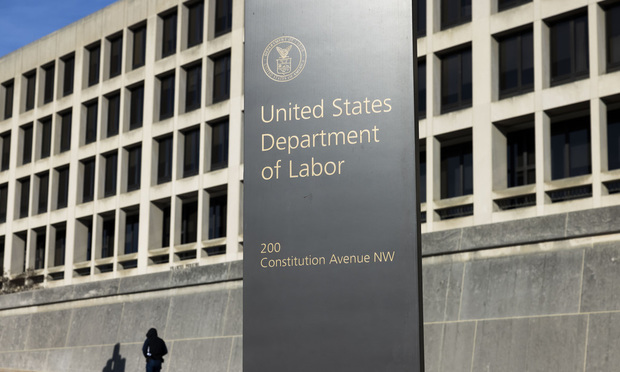
 U.S. Department of Labor building in Washington, D.C. Photo: Diego M. Radzinschi/ALM
The Department of Labor is getting down to some old business: pooled employers plans, as included in a provision in the SECURE 2.0 legislation, which became law in 2023.
The DOL announced that its Employee Benefits Security Administration is soliciting public input on how to help smaller employers that want to offer retirement benefits choose a high-quality, low-cost option known as a pooled employer plan.
Though PEPs, which are administered by pooled plan providers, have been in existence for over 50 years, SECURE 2.0 provisions and the pricing power of pooled structures is prompting more organizations to seek them out instead of 403(b)s or 401(k)s.
Operated by pooled plan providers, PEPs are retirement savings plans adopted by two or more unrelated employers to provide retirement benefits to employees and can allow participating employers to provide benefits at a lower cost. PEPs also allow participating employers to transfer most of the administrative and fiduciary responsibilities to the pooled plan providers. All of this translates to lower costs for the retirement plan participants, which can lead to increased retirement savings.
DOL’s request for information builds upon previous requests related to pooled employer plans, which were created by SECURE 2.0. The RFI provides interpretive guidance about an employer’s responsibilities when joining a PEP and offers advice on selecting a plan. The RFI also solicits information about prevailing market practices related to PEPs, which could serve as the basis for a future regulatory safe harbor that would encourage employers to join PEPs and motivate entities to offer strong and sound plans.
“The Department of Labor remains committed to helping American workers save for a secure retirement. This request for information is a key step toward identifying ways to help smaller employers lower costs and improve retirement outcomes for their employees,” said Deputy Secretary of Labor Keith Sonderling. “We’re working to deliver on President Trump’s promise to provide price relief for American families.”
Related: Senator proposes pooled employer plans and single pension IRAs for gig workers
Until final guidance is available, the DOL has issued the following tips to consider when small business employers select a PEP:
Consider several similar PEPs before selecting one. Some PEPs are straightforward and offer uniform features to all participating employers and their employees. By contrast, other PEPs may offer flexibility and customization. The best fit depends on the needs and goals of your business and employees.
Consider the experience and qualifications of the pooled plan provider. Federal law requires all PEPs to be administered by a pooled plan provider and generally holds the PPP accountable for all operations of the PEP. Therefore, it is crucial that employers ask the pooled plan provider questions relating to the quality of their services, customer satisfaction, prior litigation or government enforcement matters, and whether they are registered with the Department as is required by law.
Employers should ask questions about all the PEP's fees. Operating a PEP involves trustee services, custodial services, recordkeeping, audits, and other administrative services. Fees for these services are often quoted on a per-participant basis or based on the level of the employer's assets in the plan, or a combination of the two. There may also be start-up fees. Also relevant is a breakdown by service of how much the pooled plan provider (and any affiliate) gets paid and who approves these fees and expenses.
The DOL is accepting comments from employers until September 29, 2025.
© Arc, All Rights Reserved. Request academic re-use from www.copyright.com. All other uses, submit a request to TMSalesOperations@arc-network.com. For more information visit Asset & Logo Licensing.