 Credit: MdBabul/Adobe Stock
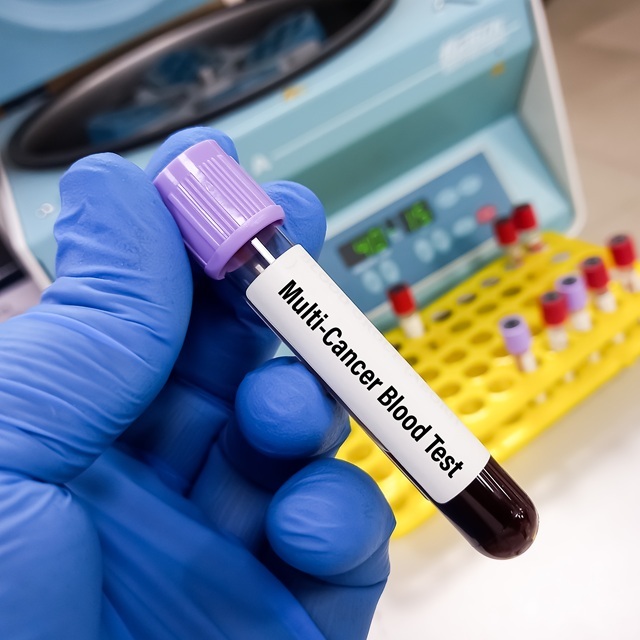
Members of the U.S. House Ways & Means Committee last week voted 43-0 to back a bill that could add multi-cancer screening blood test benefits to Medicare.
The Nancy Gardner Sewell Medicare Multi-Cancer Early Detection Screening Coverage Act bill would authorize Medicare to pay as much for the multi-cancer screening tests as it now pays for the Cologuard test and other DNA-based colon cancer screening tests.
The benefits would be available starting in 2028 to Medicare enrollees under the age of 68. The eligibility cutoff age would increase by one year every year.
The bill was introduced by Rep. Jodey Arrington, R-Texas, the chairman of the House Budget Committee.
The bill has 308 cosponsors, including 167 Democrats and 141 Republicans. The lead Democratic cosponsor is Rep. Terri Sewell, D-Ala., who is the daughter of the late Nancy Gardner Sewell. Nancy Gardner Sewell, the first Black woman elected to the city council in Selma, Alabama, died of pancreatic cancer in 2021.
The best-known multi-cancer blood test is the Grail Galleri test, which can screen for about 50 forms of cancer.
Grail is preparing to present results from Galleri performance studies at cancer research conferences in Berlin and in Portland, Oregon, in October.
What it means for employers: A Medicare multi-cancer blood test benefits law would have no direct effect on employer plans, but the law could create a big, public stream of data on the costs and benefits associated with multi-cancer blood test coverage.
If Medicare added test benefits, some employers and insurers might simply copy Medicare.
In other cases, employers and health insurers might use data on Medicare's new test benefit to decide whether to add multi-cancer blood test coverage to their benefits packages.
Sources of friction: Today, commercial health plan coverage for Galleri screening tests and similar tests is rare.
Researchers know that the tests will occasionally detect cancer where no cancer exists and sometimes detect cancers that are too small and too slow-growing to affect a patient's health.
Researchers are still analyzing whether the multi-cancer blood tests do enough to improve patients' lives to justify the cost of the tests, the burden caused by "false positives," and the burden caused by accurate detection of what will ultimately prove to be harmless forms of cancer.
© Arc, All Rights Reserved. Request academic re-use from www.copyright.com. All other uses, submit a request to TMSalesOperations@arc-network.com. For more information visit Asset & Logo Licensing.