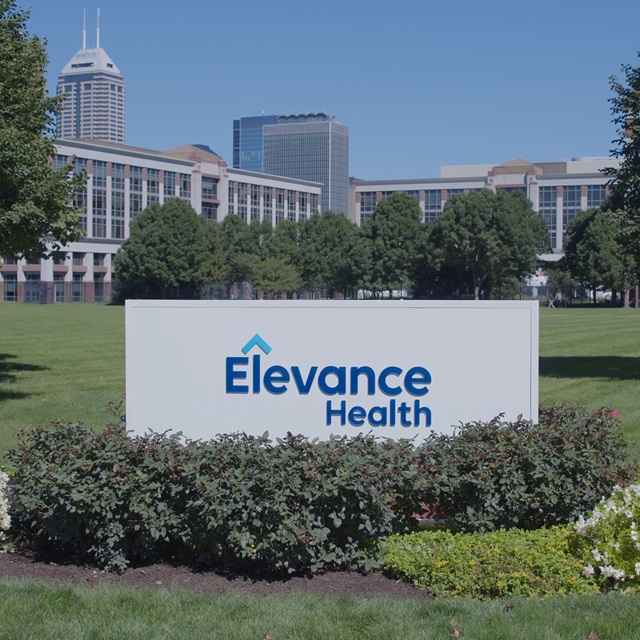
 The Elevance headquarters campus in Indianapolis. Credit: iStock
The participants in the employer-sponsored health plans that Elevance Health insures or administers are using too much inpatient hospital care in some areas.
In some places, the participants in Elevance employer plans are also getting too many high-cost surgeries.
And Elevance executives are comfortable with that.
"On the commercial group side, elevated trends persist," Mark Kaye, the company's chief financial officer, said today, during a conference call Elevance held with securities analysts to discuss earnings for the third quarter of the year. "But they remain mostly in line with what we're expecting. For the most part, very consistent with our outlook. No concerns."
Gail Boudreaux, the chief executive officer, said patient advocacy programs and programs that integrate medical care with prescription drug management efforts have kept employer customers happy.
"We maintained a disciplined approach to pricing, and we're pleased with strong client retention," Boudreaux said.
Growth in administrative operations that serve self-insured employers, or "fee-based" group health customers, has been especially strong, thanks to sales to new customers and high retention rates for existing customers, Boudreaux added.
So, how are the company's Medicaid, Medicare plan and Affordable Care Act exchange plan operations doing?
The Medicare Advantage plans and Medicare Part D prescription drug plans face high care costs, reimbursement changes and other changes that have led Elevance to prune some plans.
The Medicaid programs face falling enrollment due to federal policy changes and what Elevance sees as some states' unrealistic approach to Medicaid program funding. The typical enrollees who are still clinging to their coverage are sicker than the enrollees who are leaving, and that means the average cost per enrollee is higher.
The ACA exchange plans, which are also known as "Marketplace plans," are facing the possibility that Congress could let the current, relatively high premium subsidy levels provided in response to the COVID-19 pandemic fall back to pre-COVID levels Jan. 1, 2026. That means some enrollees could face huge increases in their share of the premiums. The typical enrollee who keeps exchange plan coverage in place in spite of facing a huge cost increase could be very sick.
Elevance is reacting to the clouds hanging over Medicaid plans, the ACA exchange plan program and, to some extent, the Medicare Advantage program by declining to provide any guidance about how much its ACA exchange plans might earn in 2026 until January 2026.
"By January, we expect to have greater visibility across our Medicaid rate cycle, marketplace subsidies and Medicare annual enrollment period results," Boudreaux said. "With these inputs, we will then establish guidance that is both prudent and achievable."
What it means: Claims are going up for employer plan participants, too, but, for now, at least, Elevance feels as if it has employer plan profit and loss margins under control.
The earnings: The third quarter ended Sept. 30.
Elevance is reporting $1.2 billion in net income for the third quarter on $51 billion in revenue, up from $1 billion in net income on $45 billion in revenue for the third quarter of 2024.
The company ended the quarter providing or administering medical coverage for 45 million people, or 0.9% fewer people than it was covering a year earlier.
The number of people enrolled in Elevance employer plans, including BlueCard program plans and the Federal Employees Health Benefits Program, fell 1%, to 32 million.
Enrollment in fully insured group health plans at employers other than the federal government fell 1.5%, to 3.6 million.
Enrollment in self-insured employer plans that Elevance administers rose 0.1%, to 21 million.
© Arc, All Rights Reserved. Request academic re-use from www.copyright.com. All other uses, submit a request to TMSalesOperations@arc-network.com. For more information visit Asset & Logo Licensing.