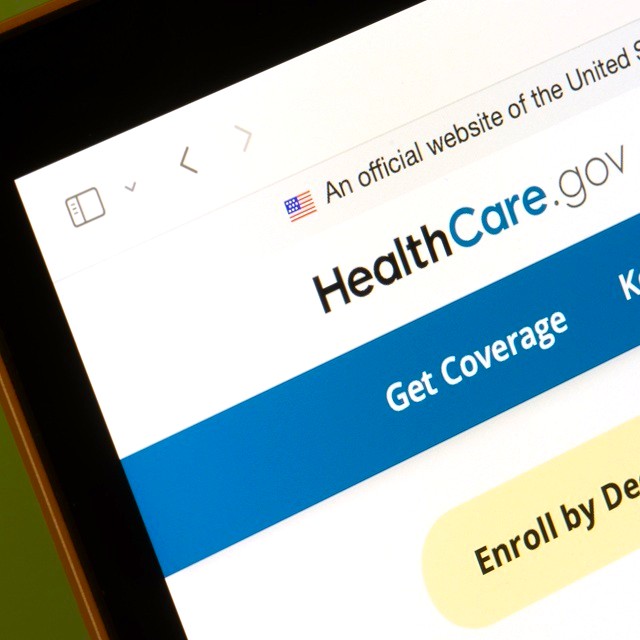
 A detail from the HealthCare.gov homepage. Credit: Tada Images/Adobe Stock
Republicans in Congress are using a new approach to fighting the Affordable Care Act major medical insurance rules: Using data to make the case that ACA rules have hurt competition in the individual market, decreased the quality of individual coverage, increased the full cost of individual coverage and reduced the odds that small employers will provide coverage.
Witnesses picked by the Republicans talked about the effects of the ACA "Obamacare" rules last week in Washington, at a hearing organized by the U.S. Senate Homeland Security and Governmental Affairs Committee.
Joel White, president of the Council for Affordable Health Coverage, testified at the hearing that, because of the ACA rules, the average number of health insurers in each state has dropped to four, from about 30 in 2011.
Many small employers have stopped offering health benefits and sent workers to HealthCare.gov and other Obamacare exchange programs to get their coverage, and the typical deductibles are now three times higher than they were before the Obamacare rules came along, White said.
"The ACA's core design requires consumers to purchase comprehensive and expensive plans," White said. "The law regulates who can buy and sell what and where, then offers incentives to purchase the most expensive plans available on the market."
White said many exchange plans now for sale come with deductibles of $10,000 or even $15,000 per year.
"That is not affordable for the typical American," White said.
Brian Blase, president of the Paragon Health Institute, a research center that's popular with the Republicans, said the ACA Obamacare system has failed to deliver on promises that it would provide affordable, high-quality coverage.
"The law entrenched an inefficient, insurance-dominated health sector with massive subsidies flowing straight from the Treasury to health insurance companies," Blase said. "The ACA's regulations increased premiums for most people to decrease them for a small number. Because enrolles pay only a small slice of the premium, insurers face virtually no price discipline, giving them incentives to inflate costs rather than improve value."
The Homeland Security Committee streamed a video of the hearing live and posted a recording on its website.
The ACA and Obamacare: The Affordable Care Act is a two-law package that includes rules and programs for everything from physician training programs to taxes on bows and arrows.
The Obamacare rules require major medical insurers to offer coverage that provides a minimum level of benefits, without putting lifetime or annual caps on "essential health benefits," without rejecting applicants who suffer from obesity or severe cancer and without charging higher premiums for enrollees with health problems.
Other rules require the plans to provide some preventive services, such as checkups, without imposing out-of-pocket costs on the patients.
The ACA Obamacare rules originally made health insurance premium subsidies to people with income under 400% of the federal poverty level who bought coverage through HealthCare.gov or another ACA public exchange program.
Congress increased the subsidy level in response to the COVID-19 pandemic. Now, people at any level can get at least some premium subsidies if the full cost of standard coverage would exceed about 9% of their income. The result of the increase is that many exchange plan users get their coverage "for free" or for spending less than $100 per month on their share of the monthly premium payments.
The history: Obamacare supporters have argued that the system has saved the lives of many people and given all insured people a chance to overcome serious health problems, and that many of the restrictions and costs are an inevitable result of the effort to give people access to solid major medical coverage without use of medical underwriting.
Democrats in Congress have justified the current federal government "shutdown," or refusal to let the government spend money to maintain normal operations according to the ordinary rules, by arguing that Republicans should first agree to keep the current "enhanced premium subsidies" in place.
Republicans, meanwhile, have often called for "repealing Obamacare" without making it clear whether they were talking only about the ACA rules that affect major medical insurance benefits and subsidies or about the many ACA sections that address other matters.
The hearing last week focused solely on the ACA provisions that affect the "Obamacare" major medical insurance framework.
What it means: Some Republicans in Congress have supported efforts to extend the enhanced subsidies, but others have opposed extension efforts, and the hearing last week suggests that extension opponents are gaining momentum.
President Donald Trump appeared to be reflecting the views of the opponents of extending the current Obamacare subsidy levels when he posted on Truth Social Saturday that subsidy money should go straight to the consumers, not to the health insurers.
© Arc, All Rights Reserved. Request academic re-use from www.copyright.com. All other uses, submit a request to TMSalesOperations@arc-network.com. For more information visit Asset & Logo Licensing.