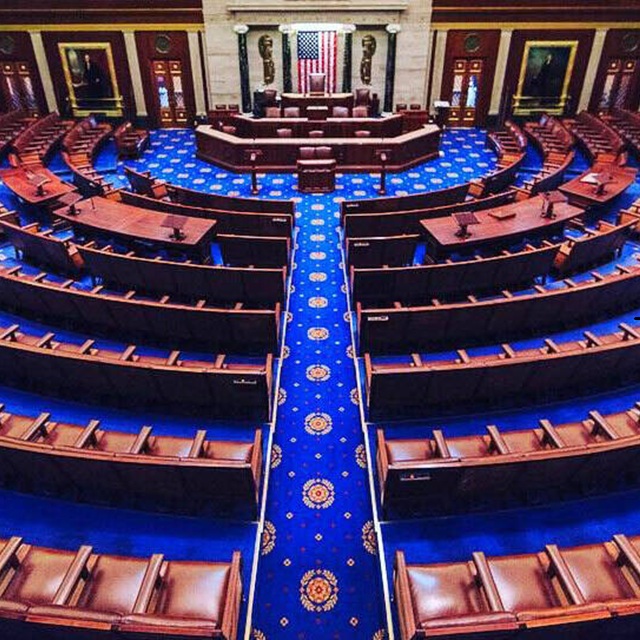
 The floor of the U.S. House of Representatives. Credit: U.S. House
Members of the U.S. House are now considering a package of health care proposals that includes many health benefits provisions, including sections that would:
◆ Make it easier for employers to team up to use association health plans to buy health coverage.
◆ Require pharmacy benefit managers to provide detailed tracking reports for employer health plan sponsor customers.
◆ Keep states from regulating the stop-loss arrangements that employers use to protect self-insured health plans against big claims.
◆ Enact the CHOICE Arrangement Act — a measure that would change the name of individual coverage health reimbursement arrangement plans to "custom health option and individual care expense" arrangement plans, or CHOICE Arrangement plans, and clear up some of the obstacles that now make ICHRA tricky for employers to use.
The bill would not extend the current relatively high level of Affordable Care Act premium subsidies, but it would provide funding for another big ACA subsidy program, the cost-sharing reduction subsidy program, starting in January 2027.
House leaders rolled out the new Lower Health Care Premiums for All Americans Act bill Friday, and they are trying to arrange for the House to vote on the bill before members leave for Christmas.
The body that prepares House bills for floor action, the House Rules Committee, has already scheduled a meeting on the bill for 2 p.m. Tuesday, and the House has already put the bill on a list of items that could be considered on the House floor this week.
House Rules procedures give committee members a chance to consider and vote on amendments to the bills being prepared for floor action. That means that there's still a chance for House members to squeeze in an ACA premium subsidy level extension provision, health savings account provisions, flexible spending account provisions or even retirement benefits provisions that are not currently in the package.
What it means: Congress could pass health benefits legislation before the end of the year.
The backdrop: Many Democrats and Republicans in Congress want to find a way to eliminate or soften the "Affordable Care Act subsidy cliff," or Jan. 1, 2026, when a temporary boost in Affordable Care Act individual and family health insurance premium subsidy levels.
For some low-income users, the change may have little or no effect on their share of the coverage premiums, but bills for typical users could double, and the costs for some relatively high-income families with heads of household over age 50 could increase to more than $50,000 per year, from less than $10,000 this year.
The legislative mechanics: Rep. Mariannette Miller-Meeks, R-Iowa, introduced the new package.
The bill includes sections that are similar to provisions in the Putting Patients First Healthcare Freedom Act bill, the CommonGround for Affordable Health Care Act bill and other health bills introduced in the House in recent weeks.
Some of the sections have had support from Democrats, but it's not clear whether the new Miller-Meeks package will have any Democratic cosponsors.
As the Meeks-Miller package heads toward the House Rules Committee, supporters of health bills with bipartisan support are trying to use "discharge petition" rules to force those bills to the House floor for a vote.
One of the bills that could still come to the floor is the CommonGround bill, an ACA subsidy-boost extension bill that was introduced by Rep. Jen Kiggans, R-Va.
Another of the bills at the center of a discharge petition effort is the Bipartisan Health Insurance Affordability Act, an ACA subsidy-boost extension bill that was introduced by Rep. Brian Fitzpatrick, R-Pa.
The Kiggans bill includes a pharmacy benefits manager provision that would apply to Medicare and Medicaid plans but not to employer plans.
The Fitzpatrick bill includes an employer plan PBM provision.
If the Meeks-Miller, Kiggans or Fitzpatrick bill, one question is whether the bill would have enough bipartisan appeal to attract the 60 votes needed in the Senate for a bill to reach the Senate floor under ordinary Senate rules.
Another question is whether Congress could pass subsidy-boost legislation in early 2026, with or without a provision that would increase January subsidy levels retroactively.
© Arc, All Rights Reserved. Request academic re-use from www.copyright.com. All other uses, submit a request to TMSalesOperations@arc-network.com. For more information visit Asset & Logo Licensing.