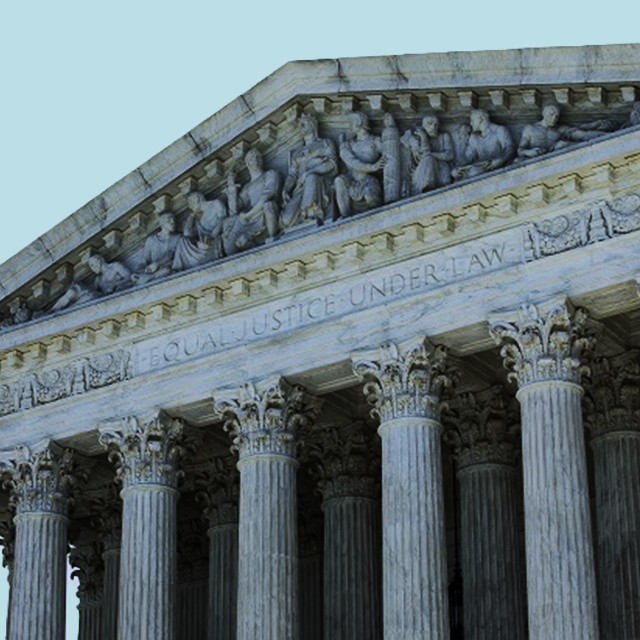
 The West Pediment of the U.S. Supreme Court. Photo: Diego M. Radzinschi/TouchPoint Markets
The U.S. Supreme Court today decided against taking up a case involving a conflict between air ambulance services providers and a giant health insurer over the payments awarded through the federal No Surprises Act "independent dispute resolution" process.
Guardian Flight and other air ambulance services firms have been trying to sue Health Care Service Corp, the parent of Blue Cross Blue Shield of Texas, over what the firms say are employer plan payment delays.
The court did not comment on its reasons for passing on a chance to rule on the case, Guardian Flight et al. v. Health Care Service Corp.
A judge in the U.S. District Court for the Northern District of Texas dismissed the suit, saying the No Surprises Act does not give ambulance services firms the ability to sue to enforce IDR entity awards.
The 5th U.S. Circuit Court of Appeals also ruled in favor of Health Care Service Corp.
What it means: Employers and their benefits advisors will have to wait to see what the Supreme Court thinks about providers suing in court to make insurers and health plans pay the awards set by No Surprises Act IDR entities.
The No Surprises Act: The No Surprises Act requires providers and insurers to resolve some kinds of disputes over billing through an arbitration-like IDR process, rather than billing a patient for the balance or taking the dispute to court.
The act calls for an insurer to pay the amount required by an IDR entity within 30 days.
The lawsuit: Guardian Flight and other air ambulance services firms sued Health Care Service Corp. over allegations that its Texas Blue division has been taking longer than 30 days to pay the amounts determined by the IDR entities.
The air ambulance firms argued in their complaint and in a petition submitted to the Supreme Court that they should be able to sue employer-sponsored health plans over NSA payment delays under the Employee Retirement Income Security Act.
Health Care Service Corp. has been breaching plan contracts, and the breaches themselves hurt the plan participants, even if the breaches do not lead directly to extra out-of-pocket costs for the patients, according to the air ambulance services providers.
Another question, the services providers said, is whether Congress intended to let providers sue in court to enforce the No Surprises Act IDR entity awards.
Health Care Service Corp. has argued that the air ambulance firms have no standing to sue under ERISA, because the patients themselves are suffering no financial losses.
The company has also argued that Congress clearly meant for federal agencies to make insurers and plans pay providers, not to create a private cause of action.
"None of petitioners' arguments demonstrate the congressional intent required to imply their proposed cause of action, and they cannot answer the statutory text that expresses instead an intent to preclude such an action," the company said in a response filed with the Supreme Court.
Representatives for the parties involved in the case could not immediately be reached for comment.
© Arc, All Rights Reserved. Request academic re-use from www.copyright.com. All other uses, submit a request to TMSalesOperations@arc-network.com. For more information visit Asset & Logo Licensing.