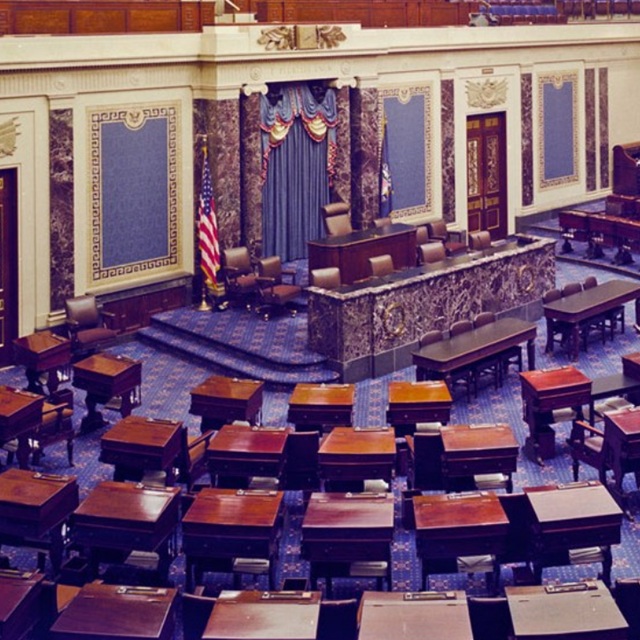
 The U.S. Senate chamber. Credit: The Architect of the Capitol
Republicans in the Senate have defended an effort by the administration of President Donald Trump to revamp the marketing and application review rules that apply to HealthCare.gov, Covered California and other Affordable Care Act public exchange programs.
Democrats proposed Senate Joint Resolution 84, a measure that would have blocked the Trump administration's new ACA exchange system "market integrity" rules.
The Senate defeated the resolution by a 47-52 vote Tuesday.
All Democrats who participated voted for the resolution, and all Republicans who participated voted against it.
What it means: For employers, the vote on the ACA exchange rules resolution may be a sign that the exchange system could keep moving along for at least another year and supplying products to workers who have no employer-sponsored health coverage and to workers who have employer-provided individual coverage health reimbursement arrangements.
The Trump administration made an effort to design new rules for the exchange system, and officials there may now want a chance to try running the system using the new rules.
The ACA exchange system: The ACA exchange system gives consumers a way to shop for individual and family coverage from commercial insurers using a web-based supermarket for health insurance. The consumers can then apply for ACA premium subsidies and use the subsidies to help reduce the consumers' share of the premium bills. Issuers can consider applicants' age and location when pricing coverage, but they cannot consider whether the applicants have health problems.
The ACA exchange system uses an "open enrollment period" system, or limits on when people can buy coverage without showing that they have what the government thinks is a good reason to be shopping for coverage, to scare younger, healthier people away from waiting until they get sick to apply for coverage.
Before the COVID-19 pandemic, ACA exchange programs typically had open enrollment periods that ran from around Nov. 1 through Dec. 31 each year.
The open enrollment period for 2026 coverage began Nov. 1 in most of the country and is set to end Jan. 15 in most of the country.
Critics have argued that some applicants have lied about their location or pretended that they were Native Americans to get around the enrollment period rules and qualify for "special enrollment periods."
In other cases, the critics have said, applicants have lied about their income to qualify for premium subsidies or increase subsidies.
Some applicants have qualified for subsidies that eliminated out-of-pocket premium payments, and the critics have suggested that some dishonest brokers have taken advantage of "free coverage" by enrolling consumers in "free" plans without the consumers' knowledge.
Trump administration ACA exchange "market integrity" rules: Trump administration officials responded to the critics' concerns by proposing changes such as shortening the standard ACA exchange open enrollment period, requiring more verification of exchange plan users' applications and eliminating access to "free" coverage.
The courts have let some of the rule changes take effect for the current open enrollment period, but they delayed implementation of many other changes.
Many Republicans in Congress, meanwhile, worked to let a temporary boost in ACA exchange plan subsidies that was adopted in response to the COVID-19 pandemic expire Dec. 31, 2025.
Supporters of letting the subsidy boost expire say the "subsidy cliff" may cause health coverage cost problems for some consumers but will minimize federal policy distortion of the commercial health insurance market.
The current system encourages health insurers to increase the full cost of coverage to maximize subsidy revenue, according to critics of the current system.
Trump administration officials have argued that the new market integrity rules will make the ACA exchange system system more efficient; reduce the risk that consumers will lie about their income, location or other characteristics to get more premium subsidies or get a chance to sign up for coverage outside the usual enrollment period; and reduce the risk that dishonest will enroll consumers in new exchange plans without the consumers ever getting a premium bill or any notice that they have new coverage.
Democrats have argued that the rule changes and subsidy changes will strangle the ACA exchange system by making it more difficult for people to show that they qualify to buy individual exchange plan coverage and use federal premium subsidies to pay for the coverage.
As of Monday, ACASignsup.net is reporting that the rule changes and subsidy changes that are now in effect have cut overall exchange plan signup activity for new enrollees by about 12% when compared with the signup activity recorded a year earlier.
The backdrop: The president has frequently attacked the cost and quality of "Obamacare" coverage, but he has not singled out HealthCare.gov or other components of the ACA exchange system for criticism, and he has not appeared to oppose the idea that consumers should get help with paying for individual commercial coverage.
The Trump administration imposed only a moderate level of spending and personnel cuts on the exchange system when budget cutters were pruning federal programs in early 2024, and the administration let the exchange system keep running more or less normally during the government shutdown that started Oct. 1 and ended Nov. 12.
© Arc, All Rights Reserved. Request academic re-use from www.copyright.com. All other uses, submit a request to TMSalesOperations@arc-network.com. For more information visit Asset & Logo Licensing.