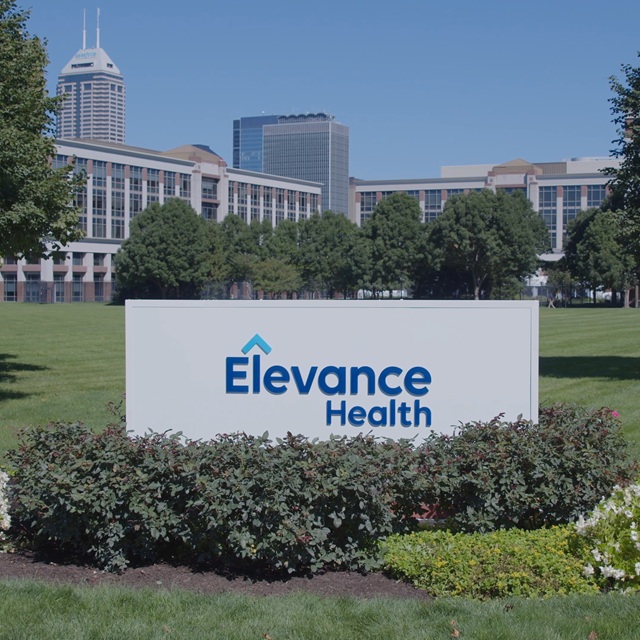
 Elevance Health's headquarters. Credit: iStock
Elevance Health is another big health insurer that's getting used to fully insured group health coverage fading away.
Executives from UnitedHealth Group said Tuesday that the company expects price increases to cut its fully insured group health plan enrollment by about 10% this year. Fully insured employer plans now account for only about 8.2 million, or 16%, of UnitedHealth's health plan enrollees.
Executives from Elevance told securities analysts today that enrollment in employer plans Elevance insures fell to 3.6 million at the end of 2025, down 2.6% from the total recorded a year earlier.
Fully insured employer plan enrollees now make up only 8% of the 45 million Elevance health plan enrollees.
Elevance — the parent of Anthem Blue Cross and Blue Shield plans in states like Indianapolis and Georgia — is increasing its own group health premiums substantially this year to cope with increases in the cost of health care.
Because of the impact of the price increases on enrollment, "we do expect a decline, year-over-year, in the high single-digit range," according to Mark Kaye, the chief financial officer. "Commercial growth has been more measured than we originally anticipated, as we prioritize disciplined pricing and margin integrity over volume."
Kaye spoke during a conference call Elevance held to go over its results for the fourth quarter with the analysts. The company streamed the call live and posted a recording on the web.
What it means: Executives at health insurance and stop-loss insurance providers have used the word "discipline" frequently for the past 18 months when talking about their prices.
So far during the new earnings release season, executives have continued to make heavy use of that word.
The earnings: Elevance is reporting $546 million in net income for the fourth quarter of 2025 on $50 billion in revenue, up from $413 million in net income on $45 billion in revenue for the fourth quarter of 2024.
It had $198 billion in revenue for the full year. That's higher than the 2024 gross domestic product, or national income, of Kuwait, according to World Bank GDP data.
Total Elevance health plan enrollment was 1.1% lower than at the end of 2024.
The number of people Elevance helps cover through Blue Cross and Blue Shield carriers' BlueCard provider-network-sharing program fell 1.8%, to 6.5 million, and enrollment in federal employee plans fell 3.4%, to 1.6 million.
Enrollment in self-insured health plans increased 0.1%, to 20.6 million.
Self-insured plans: Morgan Kendrick, president of the Elevance commercial health benefits business, which includes both individual coverage and employer group health plans, called current sales of services to self-insured plans "spectacular."
"The tee up of the actual pipeline for 2027 looks strong, and also for 2028," Kendrick said. "So, whether we're talking about the local markets or the national markets, the self-funded business has done quite well."
Claims: Kaye reported that costs at large group plans have been increasing significantly but at a rate in line with company forecasts.
"We do expect cost patterns and margins to be largely consistent with what we saw in 2025, meaning an elevated but stable trend environment with some pockets of high utilization," Kaye said.
Retention: Retention was high both for fully insured commercial health plan customers and for self-insured employer plans, according to Gail Boudreaux, the Elevance chief executive officer.
The company made a conscious decision to hold firm on prices for some unprofitable public-sector accounts, Boudreaux said.
© Arc, All Rights Reserved. Request academic re-use from www.copyright.com. All other uses, submit a request to TMSalesOperations@arc-network.com. For more information visit Asset & Logo Licensing.