 Credit: Adobe Stock
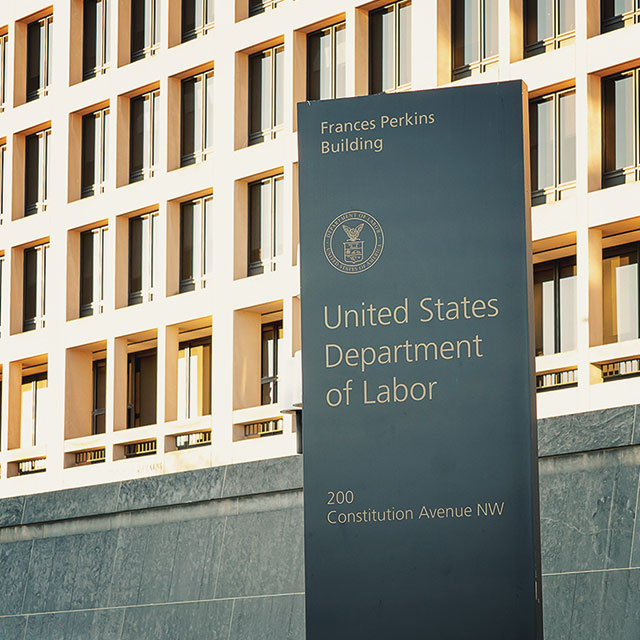
The U.S. Department of Labor has unveiled draft regulations that could impose extensive data reporting requirements on the pharmacy benefit managers that help self-insured employers provide pharmacy benefits.
The draft regulations would also require brokers, consultants, the PBMs' own service providers and many other entities involved with providing pharmacy benefits to send the employer plan sponsors and other plan fiduciaries their compensation information.
"These disclosures are needed so that fiduciaries can assess the reasonableness of the contracts or arrangements with these service providers, including the reasonableness of the service providers' compensation," officials at the Labor Department and at the department's Employee Benefits Security Administration said in the preamble to the draft regulations, which appeared today in the Federal Register.
The requirements would be structured as part of a "prohibited transaction exemption" for services arrangements under the Employee Retirement Income Security Act.
Because ERISA forbids so many activities, the Labor Department often sets new requirements by changing what ERISA prohibits, rather than by simply creating regulations that ban or require certain practices.
PBMs help employer-sponsored health plans and other health coverage providers set up and run prescription drug plans.
Pharmacists and drug manufacturers have been asking federal policymakers for help with dealing with PBMs for years. The PBMs have argued that other prescription drug supply-chain players are angry about their success at reducing the other players' excess profits, but Labor Department officials expressed sympathy for the critics' views.
Concerns have existed that PBMs "are not fully disclosing their compensation to the responsible plan fiduciaries," officials said. "The department's proposed regulation is intended to provide much needed transparency into contracts and arrangements with PBMs and affiliated brokers and consultants so that the responsible plan fiduciaries of ERISA-covered self-insured group health plans can better fulfill their statutorily mandated role to determine that the service contracts or arrangements are reasonable."
Labor Department officials have asked members of the public to send them comments and have included questions about many topics, such as how often PBM contracts are renewed, how PBMs that pass through all rebates collect and report information, and how increased access to PBM data would affect the frequency of employers' PBM audits.
Comments on the draft regulations, including answers to the questions, are due March 31.
The proposed regulations could begin to apply as early as July 1.
The requirements: The draft regulations would require a PBM to provide an employer or other employer plan fiduciary with a wide range of information that a fiduciary might need to assess the reasonableness of the PBM's compensation arrangements, such as information about direct commission and fee payments and information about indirect compensation, such as "spread compensation." In the draft regulations, spread compensation is defined as the "difference between the negotiated rate reasonably expected to be paid by the self-insured group health plan to the covered service provider, an affiliate, agent, or subcontractor and the negotiated rate reasonably expected to be paid by such entity to the pharmacy for dispensing drugs."
Officials said they expect health plan providers and third-party administrators to implement the requirements for most employers with fewer than 1,000 employees and most employers with more than 1,000 employees to participate in implementation themselves.
The PBM data access requirements in the new draft regulations appear to be comparable to the requirements included in an employer PBM transparency provision included in the big "minibus" package that, at press time, appeared to be heading toward the Senate floor. That section is based on a bill introduced by Rep. Buddy Carter, R-Ga.
The draft regulations also echo the new broker compensation disclosure requirements that EBSA is now implementing.
Congress included the broker compensation requirements in a big 2020 spending package, alongside the legislation that created the current No Surprises Act framework for protecting patients with health coverage from some types of unexpected out-of-network bills.
The draft regulations do not include anything like the provision in the minibus package that would require an employer's PBM to pass all rebates and other discounts through to employer plan sponsors or plan participants.
Neither the draft regulations nor the minibus package includes the kind of provision in California's new PBM law that classifies a PBM serving an employer plan as an employer plan fiduciary.
The scope: The new draft regulations do not apply to PBMs that serve employers with fully insured health plans, but that's because the Labor Department believes that employers with fully insured plans might have different needs, officials said in the preamble to the draft regulations.
Officials warned employers with fully insured health plans against assuming that they have no obligations to monitor prescription drug benefits arrangements carefully.
"The reservation of these disclosure obligations should not be interpreted as alleviating responsible plan fiduciaries of group health plans of any other obligations under ERISA," officials said. "Responsible plan fiduciaries must continue to satisfy their general fiduciary obligations under ERISA with respect to the selection and monitoring of all service providers. Further, service contracts or arrangements with these services must be 'reasonable.'"
Dental and vision plans do not have to comply with the major medical plan design, portability and renewability requirements that the Health Insurance Portability and Accountability Act of 1996 and the Affordable Care Act of 2010 put in ERISA part 7, but the Labor Department believes that the sponsors and issuers of dental and vision plans do have to comply with the provisions in ERISA section 408(b)(2), officials said.
ERISA section 408(b)(2) requires plan service providers to disclose their fees, and it requires plan fiduciaries to monitor to see whether the fees are reasonable.
Officials have also included a section defining what kinds of brokers and other "covered service providers" must send plan fiduciaries compensation information, and they implied that they would get tough during EBSA audits when some service providers claimed to be exempt from the proposed transparency mandates.
Service providers that say they are exempt "should be prepared... to be able to explain how a conclusion that they are not covered service providers is consistent with a reasonable good faith interpretation" of ERISA section 408(b)(2)(b), officials said.
Numbers: Officials estimated that the draft regulations would apply to 136 million people in plans subject to ERISA.
Officials noted in an analysis of the possible impact of the draft regulations that the regulations could affect 1 million level-funded plans, or plans that use a combination of stop-loss insurance and a self-insurance framework to create a self-insured plan that resembles a fully insured plan.
The regulations could also affect about 73 full-service PBMs, 809 insurers that serve level-funded plans and true self-insured plans at firms with fewer than 1,000 employees, 205 TPAs that work with level-funded plans and small self-insured plans, 104,123 traditional self-insured plans at employers with 100 to 999 employees, and 15,362 self-insured plans at employers with 1,000 or more employees, according to the impact analysis.
© Arc, All Rights Reserved. Request academic re-use from www.copyright.com. All other uses, submit a request to TMSalesOperations@arc-network.com. For more information visit Asset & Logo Licensing.