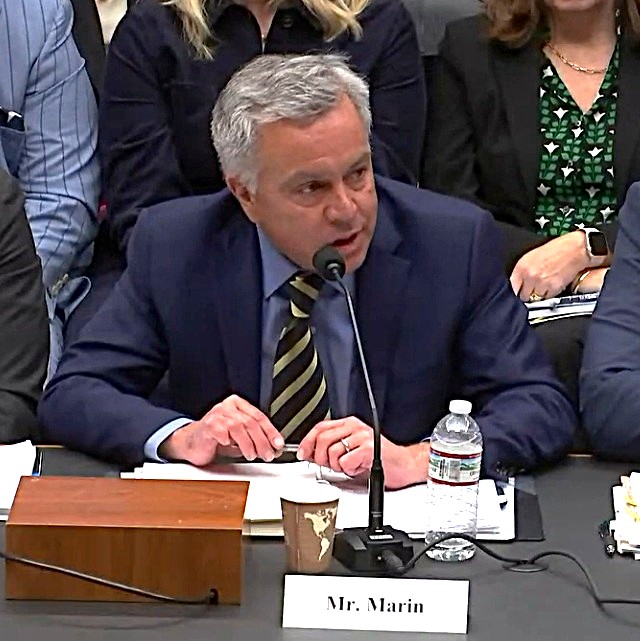
 David Marin, CEO of the Pharmaceutical Care Management Association, testified Feb. 11 at a hearing in Washington organized by the House Energy & Commerce Committee's health subcommittee. Credit: House Energy & Commerce
The new chief executive officer of the pharmacy benefit managers' trade group — the Pharmaceutical Care Management Association — testified at a House hearing in Washington Wednesday that Congress should impose tough transparency requirements on all players in the U.S. drug supply chain, not just on the PBMs.
David Marin, a former drug manufacturer government affairs executive who took over as the PCMA CEO in January, told members of the House Energy & Commerce Committee's Health Subcommittee that PBMs accept the need for more price transparency.
But he noted that the new federal PBM transparency laws included in the Consolidation Appropriations Act of 2026 spending package will require PBMs to send employer plan sponsors "reams of information" on each prescription transaction. He questioned why the transparency mandate applies only to PBMs.
"It should be applied across the supply chain," Marin said.
The laws themselves are "both unnecessary and potentially harmful to our shared goal of affordability," Marin said. "Not only do drug companies enjoy extraordinary government protections from competition, they then gamed the system over and over and over again to further prevent competition and block generics from reaching patients."
The big drug wholesalers and pharmacy services administrative organizations "wield enormous power over the prices of generic drugs and what pharmacies pay for medicines, with essentially no oversight," Marin said. "We hope the committee can broaden its inquiry into these and other parts of the supply chain. Competition has to be at the core of our affordability mission. Where there's competition, prices come down."
Witnesses from groups representing other components of the drug supply chain, such as distributors, pharmacies and group purchasing organizations, defended their own members' role in the supply chain and attacked the PBMs.
The House Energy Health Subcommittee streamed the hearing live and posted a recording on its website.
What it means: Congress could start paying more attention to prescription drug wholesalers and expanding the scope of the transparency mandates included in the new employer PBM laws.
ERIC's view: James Gelfand, the CEO of the ERISA Industry Committee, a group for big, self-insured employers, talked about the difficulties ERIC members have faced when seeking the data they need to monitor PBM arrangements.
About 40% of the employers that participated in one survey reported that they could not get any data from their PBMs, and another report shows that PBMs and wholesalers are collecting about 36% of the money spent on prescription drugs, with PBMs getting margins of 31% and wholesalers getting margins of 6%, Gelfand said.
PBM-owned group purchasing organizations have gotten around requirements that they pass any rebates through to employer plan sponsors by calling the rebates fees, Gelfand added.
Gelfand also talked about other types of potential conflicts of interest in U.S. drug supply chains.
"The bottom line is that our current system seems to promote self-dealing," Gelfand said.
© Arc, All Rights Reserved. Request academic re-use from www.copyright.com. All other uses, submit a request to TMSalesOperations@arc-network.com. For more information visit Asset & Logo Licensing.