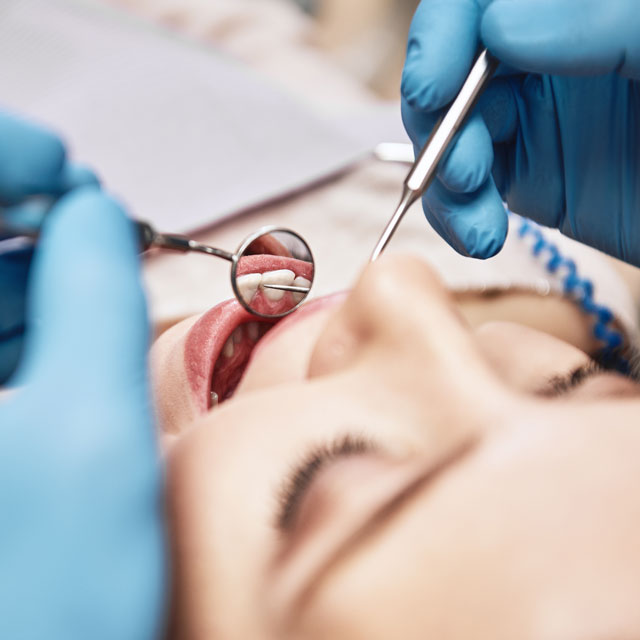
 Credit: Adobe Stock
Dental insurance strategists are trying to figure out how to create products that can serve people who work in a post-group health world.
Product designers are thinking about how an increase in the number of people who use individual coverage health reimbursement arrangement plans and other types of "cash for coverage" health plans might affect the features that buyers seek and the level of coverage that the buyers can afford.
Preston Homer, a vice president at Renaissance, an insurer that focuses on selling dental, vision, life and disability products, is already helping to design non-medical health benefits for employers with ICHRA plans.
Federal ICHRA rules require the ICHRA users to use the plan cash to buy individual major medical coverage.
But, when the ICHRA users choose ancillary benefits, "we're seeing many gravitate toward dental plans that feel similar to traditional group offerings," Homer said. "Many employers transitioning to ICHRAs are coming from the group market, and employees tend to prefer benefits that feel familiar and comprehensive."
Felix Ortiz III, the founder and chief executive officer of Smirk Health, an insurance agency that offers relatively low-priced, portable products aimed at part-time workers, seasonal workers and gig workers, said one challenge is that dental benefits providers are still learning how to meet the needs of today's workforce.
"Most dental products were built around legacy employer-sponsored models," Ortiz said. "We see a broader opportunity as benefits continue shifting toward more flexible, worker-controlled models."
The backdrop: About 117 million U.S. adults, or 44% of the total, had employer-sponsored dental insurance in 2023, but 12% of the U.S. adults with private medical insurance had no dental insurance, according to Carequest.
Executives at companies like Aflac, MetLife, Principal Financial and Unum see the markets for traditional group, voluntary and worksite dental insurance as vibrant, competitive markets.
Many issuers had to increase prices in 2025 to cope with the effects of ferocious competition and aggressive price-cutting in 2024.
But the companies have told securities that dental plan sales and retention were strong in 2025, and that the price increases have succeeded at bringing the ratio of claims to revenue in line with expectations.
ICHRAs: ICHRAs and qualified small employer health reimbursement arrangements offer employers a legal way to provide cash that workers can use to buy individual medical coverage.
Analysts at HealthSherpa, a health insurance enrollment support services firm, have estimated that ICHRA use has tripled in the past year and now stands at somewhere between 400,000 and 800,000.
Homer said he believes reports of ICHRA use expansion are correct.
"ICHRAs are definitely gaining momentum," Homer said.
Health account maze: Ortiz said one challenge for employers, benefits advisors and nontraditional workers is that the rules governing which health accounts can pay for what are complicated.
A nontraditional worker could have a health savings account, a flexible spending arrangement, a traditional health reimbursement arrangement, an ICHRA or a QSEHRA, Ortiz said.
When a worker has an HSA or an FSA, the funds "can typically be used to pay for qualified dental care expenses, such as cleanings, fillings and other treatments," Ortiz said. "Use of those accounts to pay insurance premiums depends on the specific account type and employer plan rules."
When a nontraditional worker has an ICHRA or a QSEHRA, whether the cash "can be used to purchase stand-alone dental insurance depends on how the employer structures its plan and what reimbursement categories are permitted," Ortiz said.
© Arc, All Rights Reserved. Request academic re-use from www.copyright.com. All other uses, submit a request to TMSalesOperations@arc-network.com. For more information visit Asset & Logo Licensing.