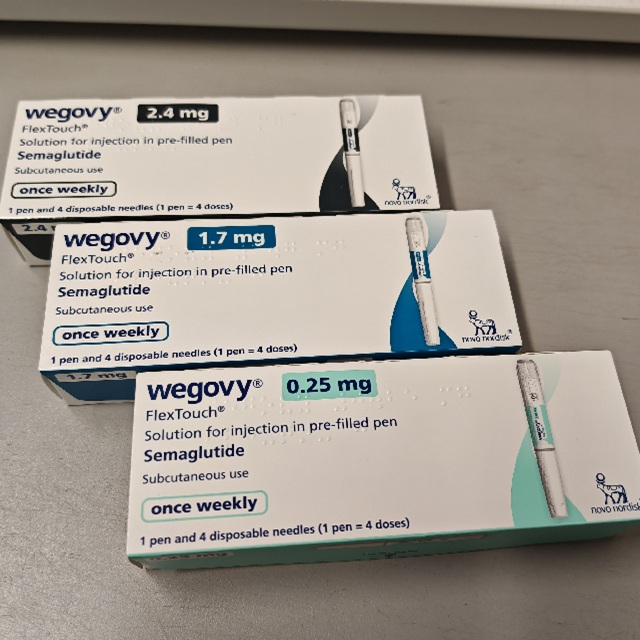
 Boxes of Wegovy injectors. Credit: Semi/Adobe Stock
The online telehealth provider Hims & Hers has a self-proclaimed "long history of providing safe access to personalized healthcare" to patients but its recent decision to mass market a cheaper copycat version of Novo Nordisk's new immensely popular obesity pill, Wegovy, has drawn stinging criticism from the Danish pharmaceutical giant. In short, Novo Nordisk believes that by marketing such untested medicines, Hims & Hers is exposing patients to drugs that may contain dangerous impurities or incorrect amounts of active ingredients, resulting in life-jeopardizing immune reactions.
Originally, Hims & Hers had intended to sell a knockoff version of Wegovy — one that still contained the weight-loss pill's active ingredient, semaglutide — for merely $49 for the first month and then $99 for each subsequent month, or approximately $100 less than Wegovy's market price for the same respective time periods. However, Novo Nordisk, which also produces Ozempic, alleged that Hims & Hers was bringing an unsafe product to market that has not been approved by federal authorities and infringes on the company's patents. Subsequently, Novo Nordisk threatened to take legal action, opining in a statement that, "this is another example of Hims & Hers' historic behaviour of duping the American public with knock-off GLP-1 products, and the FDA has previously warned them about their deceptive advertising of GLP-1 knock-offs."
Amidst the sharp backlash, both from Novo Nordisk and U.S. authorities — Mike Stuart, the lead attorney for the Department of Health and Human Services, came out and acknowledged that his office had referred Hims and Hers to the Justice Department for potential violations of a federal law that regulates the sale of medications — Hims & Hers reversed course by deciding to cancel its plans to market the copycat version. However, Hims & Hers' response wasn't enough to prevent Novo Nordisk from moving forward with a lawsuit against the online telehealth provider for manufacturing the aforementioned copycat version of Wegovy.
Hims & Hers is one of the largest manufacturers of copycat versions of weight-loss medications produced via compounding, a legal process whereby US drugmakers are permitted to sell medications that haven't been approved by authorities (i.e., the FDA) for meeting quality, safety, or efficacy standards but still meet specific patient needs that may not be satisfied by mass-produced drugs. Furthermore, compounded drugs are often manufactured on a case-by-case basis when a physician determines they are medically necessary for a patient, such as when they are unable to swallow a pill or are allergic to a certain ingredient in a branded drug. (Novo Nordisk's weight-loss drugs are not compounded.)
The reality is that with many Americans being priced out of branded weight-loss medications, there is robust demand for compounded versions of patent-protected drugs that don't carry such a steep price tag. According to CNBC, Novo estimated in January that as many as 1.5 million Americans are using compounded GLP-1 drugs, even though there are no shortages reported for the Wegovy pill.
On February 9, Hims referred to the lawsuit as "a blatant attack by a Danish company on millions of Americans who rely on compounded medications for access to personalized care" and is another example of Big Pharma "weaponizing the US judicial system to limit consumer choice." Conversely, Novo, as well as its chief competitor, American global pharmaceutical company Eli Lilly, which produces the weight-loss medication Zepbound, are of the belief that compounding pharmacies are benefiting from the skyrocketing popularity of their weight loss and diabetes medications. John Kuckelman, Novo's group general counsel of global legal, intellectual property and security, told CNBC earlier this month that his company has thus far filed approximately 130 lawsuits concerning consumer fraud and deceitful marketing practices.
There is a segment of the pharmaceutical industry that sides with Novo Nordisk. According to a recent New York Times article, there are critics who feel that "Hims's new pill represented a brazen attempt to steal customers from Novo Nordisk, which has patents protecting both its injectable and pill versions of Wegovy" while other critics have also "accused Hims of undermining the F.D.A.'s role as a gatekeeper and of creating a dangerous precedent that could discourage drugmakers from investing in inventing and testing new treatments." If the knockoff medication were allowed to be lawfully disseminated, the argument goes, what would prevent Hims or other corporations from immediately manufacturing and selling their own versions of other patent-protected medications?
For now, the race to capitalize on the insatiable demand for weight-loss drugs remains turbocharged with pharma companies across the globe in fierce competition.
© Arc, All Rights Reserved. Request academic re-use from www.copyright.com. All other uses, submit a request to TMSalesOperations@arc-network.com. For more information visit Asset & Logo Licensing.