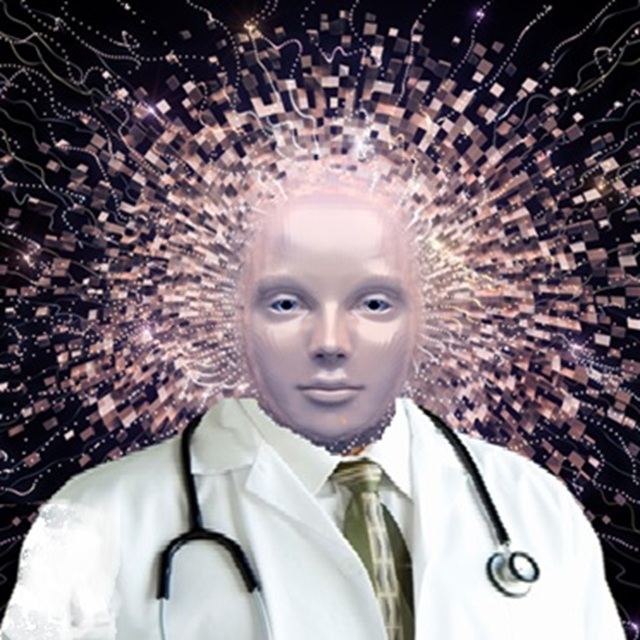
 Credit: Sergey Tarasov/Adobe Stock
A new effort by the administration of President Donald Trump to preempt state regulation of artificial intelligence could lead to battles over the rules for AI health care providers.
The White House posted an AI national policy framework document Friday.
Trump administration officials call in the framework for letting states enforce child protection laws, fraud prevention laws and consumer protection laws against AI developers and AI users.
Officials also state that the federal government should "prevent a fragmented patchwork of state regulations that would hinder our national competitiveness."
"Congress should preempt state AI laws that impose undue burdens to ensure a minimally burdensome national standard consistent with these recommendations, not 50 discordant ones," according to the framework.
Officials have not recommended an exclusion for state health care or state insurance laws, and they have not suggested that the U.S. Department of Health and Human Services and the U.S. Department of Labor should accelerate the development of AI health care, health insurance or health benefits rules.
The new framework builds on the ideas in an AI executive order that the White House released in December 2025.
Federal policymakers using the framework could soon try to block state efforts to regulate use of AI systems in insurance underwriting, insurance claim review processes and health care services delivery.
What it means: For employers and benefits advisors, battles involving state governments, federal officials, AI firms and provider groups represent a new, high-tech addition to the long-running fights over the "scope of practice" of biological human health care providers, such as nurse practitioners, nurse midwives and pharmacists.
Some employers may want state help with protecting employees from use of shoddy or privacy-invading AI-based systems, especially if federal policymakers leave big oversight gaps. Other employers may prefer to be able to try new, AI-driven health care services without worries about biological human providers trying to protect their turf against cyber rivals.
The backdrop: The National Conference of State Legislatures AI database lists 23 health care AI bills enacted last year and this year.
California, for example, recently prohibited AI systems from identifying themselves as physicians or other types of licensed health care providers.
Nevada, Utah and Illinois have laws that control the kinds of mental health services that AI systems can provide.
The Illinois law an AI from providing mental health treatment services, and it prohibits a licensed professional from letting an AI system detect a patient's emotions or mental states, according to the NCSL summary.
Oregon forbids AIs and other nonhuman entities from using the title of nurse.
© Arc, All Rights Reserved. Request academic re-use from www.copyright.com. All other uses, submit a request to TMSalesOperations@arc-network.com. For more information visit Asset & Logo Licensing.