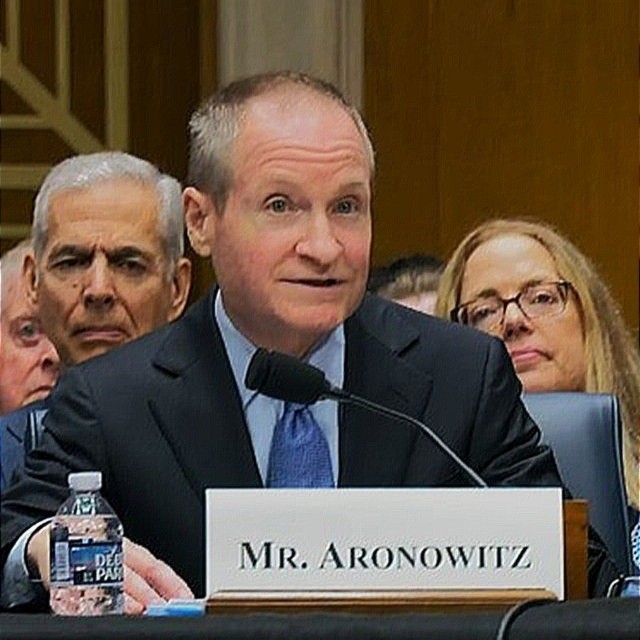
 Daniel Aronowitz testifying at his Senate confirmation hearing. Credit: Senate HELP Committee
The U.S. Department of Labor's benefits agency wants to be quick to help conscientious plan sponsors and service providers that are acting in good faith.
Daniel Aronowitz, the assistant secretary of Labor and administrator of the DOL Employee Benefits Security Administration, says in a new description of the guiding principles for EBSA enforcement that he wants EBSA to be fair and focused.
One principle is ensuring that "EBSA does not regulate by enforcement," Aronowitz writes in the memorandum.
But EBSA will focus "enforcement on the most egregious conduct and significant harm," and it will target employer plan cases involving "direct evidence of disloyalty" to the plan participants or "impermissible conflicts of interest," Aronowitz writes.
"EBSA remains committed to protecting benefits for plan participants and beneficiaries," and it intends to enforce federal health plan disclosure requirements, claims processing standards and dispute adjudication requirements, Aronowitz adds.
He says EBSA will also enforce the health benefits laws included in Employee Retirement Income Security Act part 7. Part 7 rules include many provisions of the Health Insurance Portability and Accountability Act of 1996, the Mental Health Parity Act of 1996, and the Mental Health Parity and Addiction Equity Act of 2008.
What it means: EBSA might pick different enforcement targets now, under the administration of President Donald Trump, than it picked under President Joe Biden, but it might still be tough on the targets that it picks.
Daniel Aronowitz: Aronowitz is a longtime benefits attorney who ended up running the Encore Fiduciary business, which helped employer plan fiduciaries manage fiduciary risk. He blogged about benefits law for years and often blasted the Labor Department for making too much use of litigation.
Labor Department officials often suggested that providing broad descriptions of goals could protect benefit plans against unscrupulous plan sponsors and service providers who might try to use loopholes to hurt the plan participants.
Aronowitz argued that the department should give employers better advice about how to comply with department rules.
The backdrop: Since Aronowitz took the reins at EBSA has emphasized deference to the views of plan sponsors in connection with conflicts over issues such as pension risk transfer transactions.
But EBSA officials indicated in a description of enforcement priorities posted in January that EBSA is keenly interested in employer plan compliance with federal mental health parity requirements and plan compliance with No Surprises Act claim payment dispute resolution deadlines.
The new memorandum: Aronowitz says in the new memorandum that EBSA will try to base enforcement activity on the "plain language of ERISA's text," clearly established Labor Department guidance or rules established by court cases.
EBSA might have to go outside those boundaries to deal with new types of concerns or apply new legal theories, but, if it does that, "these actions must first be vetted and approved by EBSA senior officials," Aronowitz writes.
Most investigations should be completed within 18 months, and most of the most complex investigations should be completed within 30 months, Aronowitz says.
EBSA investigators and professionals should also eliminate "any appearance that EBSA enforcement activities and priorities are being coordinated with plaintiff lawyers pursuing private actions," Aronowitz says.
In a discussion of the kinds of employer or plan service provider actions that could still lead to criminal investigations, Aronowitz cites moves to "improperly administer plan benefits or misappropriate (or, aid in the aid of misappropriation of) assets set aside for the benefit of the American worker."
"This includes conduct designed to enrich themselves or other goals unrelated to participants' best interests, such as the promotion of environmental, social, or governance objectives," Aronowitz writes.
© Arc, All Rights Reserved. Request academic re-use from www.copyright.com. All other uses, submit a request to TMSalesOperations@arc-network.com. For more information visit Asset & Logo Licensing.