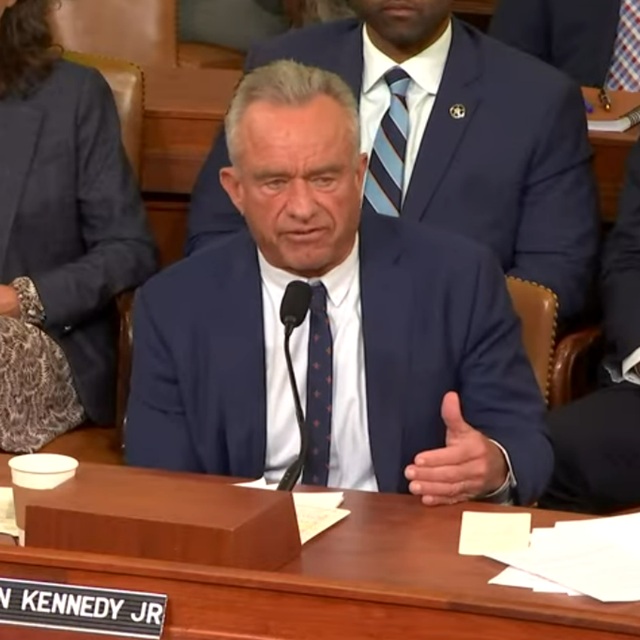
 Robert F. Kennedy Jr. testifying at a U.S. House Ways and Means Committee hearing. Credit. House Ways & Means Committee
Robert F. Kennedy Jr. testified at U.S. House hearings held Thursday and today that the federal government needs to get tougher on health insurers and pharmacy benefit managers.
Kennedy, the secretary of the U.S. Department of Health and Human Services, appeared at budget hearings organized by the House Ways & Means Committee and the House Education & Workforce Committee.
Kennedy said at the Ways & Means hearing that policymakers need to fix problems with health care costs and patient access to care by doing more to promote competition.
President Donald Trump has been talking since at least November 2025 about replacing flows of subsidy cash to health insurers with flows of subsidy cash to consumers, by putting the cash in health savings accounts or similar types of accounts, and Kennedy emphasized his support for that strategy.
To improve the U.S. health care system, "we need more outcomes-based care," Kennedy said. "You need more HSAs. President Trump wants to take the money from the insurance companies."
The Affordable Care Act has shaped the flow of federal subsidy money in ways that have done more to help insurers than to cut Americans' premiums, Kennedy said.
"They had the illusion that premiums went down slightly," Kennedy said.
Kennedy said at the House Education & Workforce hearing that he is happy about the new federal transparency laws and other laws that apply to pharmacy benefit managers, or organizations that help insurers, self-funded employer plans and other "payers" buy and manage prescription drug benefits.
"It's one of the perverse features of the health care system that PBMs, who add nothing, are getting 40% of the profits from drugs, and they're driving up costs," Kennedy said. "President Trump has us laser-focused on fixing the problem."
Kennedy praised efforts by Cigna, the parent of the Express Scripts PBM, to shift to a new PBM compensation system.
"The PBMs' compensation was increased by getting you to buy the most expensive drug," Kennedy said. "They made more money if you bought the most expensive form of the medication. And that's one of the things that drove up health care costs."
© Arc, All Rights Reserved. Request academic re-use from www.copyright.com. All other uses, submit a request to TMSalesOperations@arc-network.com. For more information visit Asset & Logo Licensing.