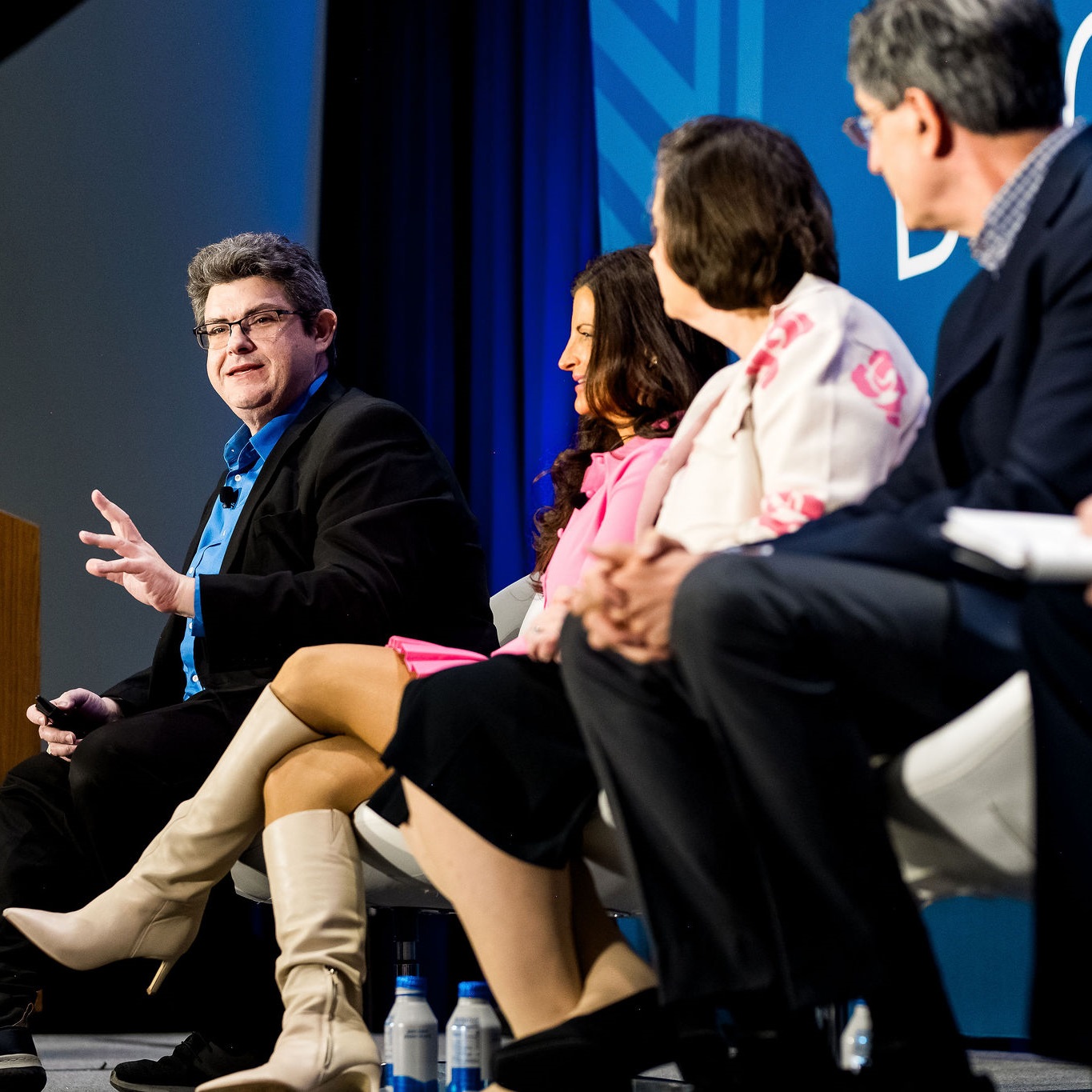
Following the success of last year's opening keynote with the creators of the documentary, It's Not Personal, It's Just Healthcare, director Bart Camarata returned to this year's BenefitsPRO Broker Expo to discuss his follow-up film, Side Effects May Include: The Hidden Costs of Prescription Drugs.
The new documentary explores pharmacy benefit managers (PBMs), the middlemen between drug manufacturers and employers that negotiate drug pricing and manage pharmacy benefits. As legislative efforts to reform their business model gain steam, panelists argued that employers should also be pushing for more transparency and accountability.
"You've got to let people know that these business deals are going on behind the scenes so they're inspired to change," Camarata said. "But inspiration isn't enough. You have to put this into the hands of people who can take employers by the hand and say, 'Follow me.'"
Many benefits professionals in the audience likely already understood what a PBM is and how it affects what consumers and health plans pay for drugs. Even so, panelists said, they may not always have the right information — or the right questions — to take control of the conversation.
"For me, involvement [in the film] was about education," said Renzo Luzzatti, president of US-Rx Care. "It's a black box for most folks. But there's hope — there are solutions."
During the discussion, Camarata, Luzzatti, and fellow panelists Susan Hayes, co-founder of Pharmacy Outcomes Specialists, and Rachel Strauss, CEO and founder of PBM Princess, urged attendees to ask their PBM partners direct questions about how they operate. They shared examples of what to ask, as well as the real-world scenarios in which those questions matter.
Question: Do we have to use your rebate aggregator?
"See if they say that's fine. If they're skimming the rebates, they're going to say you have to use them exclusively," Luzzatti said.
"Or they'll take the challenge and hope theirs is the best deal," Strauss added.
Question: How do you make money?
It's a blunt question, but it can be one of the most informative. Camarata shared a story from a recent meeting where he posed it directly to a PBM. "It was like I sucked all the air out of the room," he said. "It got really awkward. I looked at my client and said, 'You can't use them.'"
Question: How do you approve prescriptions for patients?
The panelists emphasized the growing importance of clinical management in the PBM space — specifically, how PBMs determine whether a prescribed drug is truly the best fit for a patient. That process is "what any well-managed PBM will do," Luzzatti said, but he added that it's "not commonplace in the PBM industry." Applying clinical rigor, he noted, can also be a barrier to PBM profitability.
Luzzatti also recommended asking how long it takes to approve a claim. "If they say, 'We auto-adjudicate 99.9% of claims in less than a second,' run. They're not looking at anything. A well-managed plan is looking at the medical record," he said.
Question: How are you auditing for fraud, waste and abuse?
Hayes, whose work focuses on fraud, waste and abuse, shared an example from an audit she conducted for a stop-loss carrier reviewing the use of an expensive HIV drug. "The patient never picked up this drug," she said. "The prescription got sent to the pharmacy, it got adjudicated to the PBM, the employer paid it — but the patient never signed for those drugs. They were never reversed in the claims history."
By asking questions like these (Camarata pointed the audience to his previous film for more examples), benefits professionals and their clients can start to gain real visibility into PBM practices and costs.
Photo: Lauren Lindley Photography
© Arc, All Rights Reserved. Request academic re-use from www.copyright.com. All other uses, submit a request to TMSalesOperations@arc-network.com. For more information visit Asset & Logo Licensing.