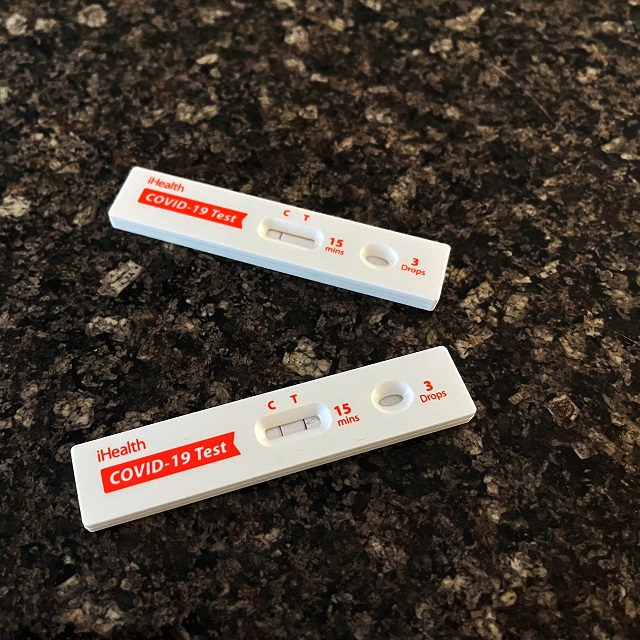
 COVID-19 at-home test kits. Photo: Ross Todd/ALM
Cigna will face a federal trial over allegations that it failed to reimburse more than $6 million in COVID-19 testing claims, after a federal court ruled that most of the dispute involves factual questions that must be decided by a jury.
The case, brought by Connecticut-based provider group Murphy Medical Associates, stems from COVID-19 testing services delivered during the pandemic at sites across Connecticut and New York. The provider alleges it administered testing to thousands of Cigna members but was not properly reimbursed under federal pandemic-era coverage rules.
According to a May 8 federal court ruling and related reporting on the decision, the U.S. District Court for the District of Connecticut denied Cigna's attempt to dispose of the case at the summary judgment stage. The court allowed the majority of Murphy Medical's claims to proceed to trial, dismissing only a narrow subset involving a patient who was not covered under a Cigna plan.
At the center of the dispute are federal COVID-19 emergency laws, including the Families First Coronavirus Response Act (FFCRA) and the Coronavirus Aid, Relief and Economic Security (CARES) Act. Those statutes required insurers to cover COVID-19 testing without cost-sharing during the public health emergency. Murphy Medical argues those requirements also extended to reimbursement for out-of-network providers that established testing sites during the crisis.
Cigna has disputed both coverage and administrative issues in the case, including whether certain claims were properly appealed under plan procedures and whether some patients were eligible for coverage. However, the court found these issues involve disputed facts that cannot be resolved without a trial record.
A key point of contention involves internal appeals documentation. Murphy Medical alleges it followed Cigna's appeals process for denied claims, while Cigna has said it cannot locate corresponding appeal records. The court noted that Cigna did not sufficiently demonstrate that it had fully searched its own systems or established that the records do not exist, a factor that may become central at trial.
The financial scope of the dispute has also expanded during litigation. Murphy Medical initially sought $4.6 million in reimbursement but later amended its complaint to approximately $6 million after identifying additional unpaid claims tied to more than 4,400 Cigna members who received testing.
Beyond reimbursement, the case has also taken on a reputational dimension. Cigna previously accused Murphy Medical of price gouging for COVID-19 testing, allegations the provider has denied.
While the ruling sends the dispute toward trial, no trial date has been set. The case now enters the pre-trial phase, where additional discovery and motion practice could still influence whether the matter ultimately proceeds to a jury or settles beforehand.
More broadly, the litigation underscores lingering legal and financial tensions from the COVID-19 emergency period, as insurers and providers continue to work through how federal testing mandates should be interpreted and enforced years after the public health emergency ended.
© Arc, All Rights Reserved. Request academic re-use from www.copyright.com. All other uses, submit a request to TMSalesOperations@arc-network.com. For more information visit Asset & Logo Licensing.