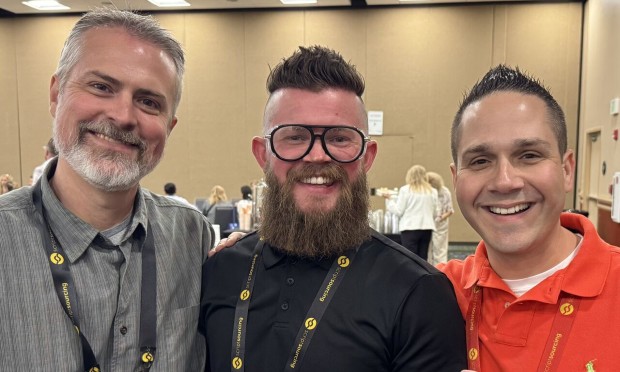
 Paul Wilson, Taylor Miles and Eric Silverman
There’s a whole lot happening in our industry right now. Well, always. And as advisors and other benefits professionals know all too well, it’s incredibly challenging just to keep pace with all the changes, let alone try to plan ahead.
One of the best ways I’ve found to keep my ear to the ground when it comes to industry trends and find out what’s on the minds of top benefits professionals is by attending industry events. Whether it’s our own Broker Expo, various NABIP conferences throughout the year, or other great events like Q4Live, Behavioral Health Tech and RosettaFest, nothing beats meeting up with old friends and making new connections in person.
Most recently, I made the short hop from Denver to Utah to attend the 10th annual ASCEND conference in Salt Lake City. As always, Nelson Griswold and his team put on a great show, attended by top benefits advisors, innovative solutions providers, and yes, more than a few people who like to stir the pot and push boundaries. From fiduciary and compliance updates, to the latest on how advisors are using AI and technology, to strategic advice from leading disruptors in our industry, there was a lot going on. Here are a few key takeaways and quotes from my time in SLC:
1. The more things change…

As always, Nelson Griswold came out swinging with a fiery opening keynote in which he drew parallels between the volatile environment of the 2020s and that of the 1920s: both are eras of new media, distrust in government, massive business consolidation, and featuring a rise of reformers targeting robber barons.
To be clear, Griswold said that today’s health care reformers are taking on the health care robber barons of the status quo by using innovative self-funded strategies that truly control the cost of health care.
2. AI’s impact: benefits advisor edition

For years now, we’ve been hearing about AI in benefits and health care, often in reference to chatbots and other (relatively) simple tools. But as Ben Conner, Steven Amiel, Jason Beutler, Ken Resnikov and Julian Lago discussed during their keynote session, AI’s strategic impact in the benefits industry is reaching whole new levels. And if you don’t get on board soon, you risk being left in the dust — and missing out on an unprecedented opportunity. Here are a few soundbites from their session:
- “Those who didn’t adapt to the ACA are no longer in the industry. We think AI will have a similar impact on the future of this space. We must embrace it and move forward or we’ll get left behind.”
- “There’s a lot of hype around AI right now and it can be overwhelming. I recommend people use AI to challenge your assumptions and ensure you’re approaching a topic holistically.”
- “In 18-24 months, AI will no longer be a competitive advantage. It will soon be table stakes and an expected way of doing business.”
- “AI is a tool you should be wearing like a badge of courage with your clients and prospects.”
- “AI can eat up your redundant tasks and adds value and nimbleness to organizations and brokerages.”
- “We all do things differently. That’s what makes us and our businesses unique. AI isn’t a magic bullet but you should use it to double down on the things that make you and your business unique.”
- “Key takeaway: Get in the game and pick the brains of experts.”
3. Not your parents' HR leaders

Not so long ago, many benefits advisors thought of HR professionals as gatekeepers (or road blocks) on the road to reaching the “true” benefits decision makers. But those days are over. Stephanie Koch, SCP-SHRM, SPHR, CHVA shared insights into her own personal transformation and how she became a leading-edge HR leader who champions the possibilities that come with a self-funded plan and advocates for HR to help lead real change. In her session, she detailed what caused her to flip the switch — and how advisors can help others make the same move.
- “Advisors stand out when you do something different, but HR doesn’t always have the vocabulary or education to know what you’re talking about. Like anybody, we don’t know what we don’t know.”
- “Your conversations with an HR leader should be different from what you talk about with CEOs and CFOs. They each have different priorities and goals.”
- “Explain how you and your team will support HR and their employees — and not just during enrollment.”
- “Show us how and why the health care system is misaligned. Brokers who get paid by carriers are not working in your company’s best interest.”
- “Don’t oversell — it’s overwhelming. Don’t force the relationship. Trust is earned.”
4. (Not so) quiet revolution

Nelson Griswold returned to the stage alongside health care transparency pioneer, Keith Smith, to discuss the ongoing free market rebellion in health care and Dr. Smith’s work to create transparent health care prices at Surgery Center of Oklahoma. Their conversation was spicy, unapologetic and … well, transparent.
- “My inspiration for revolutionizing health care transparency was when I realized I was an accessory to a crime by operating the old way. It didn’t seem right that I could anesthetize someone for a minor procedure and they’d end up bankrupt.”
- “Not-for-profit means those hospitals just don’t pay taxes.”
- “I lower my prices whenever I can so I can help more people and become even more of a nightmare to the status quo. And we are still very profitable.”
- “Our revolution isn’t quiet any more. It’s scaring the hell out of big hospitals across the nation.”
- “This industry has to endure the same market discipline as every other industry out there.”
5. Reaching peak plan performance

In another packed breakout session, Renzo Luzzatti Kasha Ozog and Nurse Deb Ault shared tips about what benefits advisors don’t know — and must learn — about plan performance. Their session was chock full of practical advice about the types of employers that next gen advisors should (and shouldn’t) work with:
- “Transparency can mean whatever you want it to mean. The word has been used and abused for a long time. But transparency is only one of three criteria to become a fiduciary.”
- “Carving out a PBM is a great start, but it’s only the first step. Make sure your partners are taking additional steps and digging into the plan docs, including ensuring that the care is appropriate.”
- “Pharmacy is the easiest problem for advisors to fix and a great way to get a BOR. Ask ‘If your plan spends more money, does your PBM make more money?’
- ‘Do their practices and actions align with your fiduciary responsibilities?’”
- “PBM rebates are fool’s gold.”
- “Getting the clinical management piece in order is the most important step advisors can take.”
- “One of the biggest challenges for advisors is identifying employers who understand there is a problem with U.S. health care. That should be one of the first things you try to find out before working with a company: do they understand how much this change is needed?”
6. I'm not for everybody

Three top advisors — Daniel McCauley Dan Thompson and Rachel McLauchlin — shared a number of candid tips about prospecting and strategies for selling strategically. Their discussion echoed a growing trend I’m hearing from advisors: Disruption isn’t easy, but it can be incredibly rewarding — as long as everyone is aligned.
- “It’s not all roses. There are lots of ups and downs when it comes to being a disruptor.”
- “You have to walk away from some opportunities. You shouldn’t waste your time with people who can’t or won’t make decisions.”
- “Our best clients are those where the C-suite is aligned.”
- “Some advisors have analysis paralysis. I bring almost nothing to a first meeting. I’m interviewing them as much as they’re interviewing me. And I tell them that if they’re not in the right mindset, we might not be a good fit for one another.”
- “I have spent a ton of time getting to know the medical community where I live and helping them understand what we do. They often have no idea and they have become a great referral source. All the business we get now is inbound and I regularly get walked into meetings with the C-suite. The main people who are connected with CEOs are other CEOs and the medical community.”
Hopefully this month’s column gave you a few key insights or takeaways and inspired you to connect soon with some industry peers and friends. I’m looking forward to attending more industry events in the coming months, including RosettaFest in August, HR Tech in September and Behavioral Health Tech in November. What live events are on your radar as we close out 2025?
© Arc, All Rights Reserved. Request academic re-use from www.copyright.com. All other uses, submit a request to TMSalesOperations@arc-network.com. For more information visit Asset & Logo Licensing.