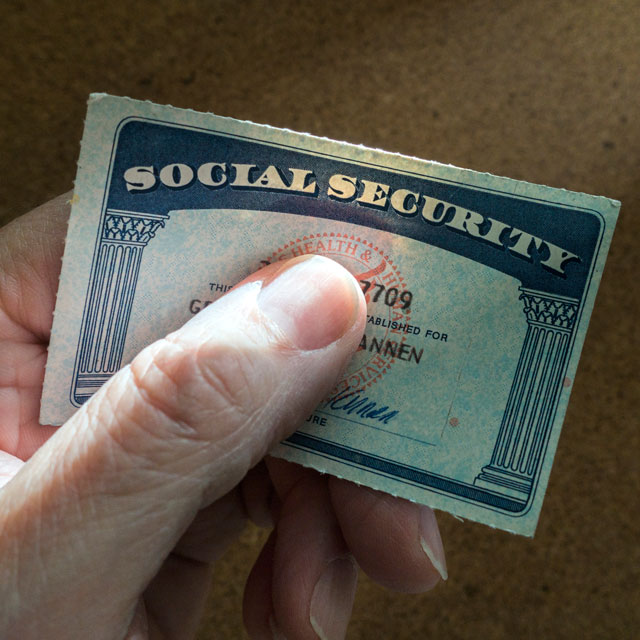
 A Social Security card
More than one million employers and self-employed individuals took advantage of a special IRS provision that allowed them to defer $133 billion in Social Security payments during the pandemic. Although most since have paid as required, around $2 billion in unpaid deferrals remain, according to an audit by the treasury inspector general for tax administration.
Under the CARES Act, employers could defer the full amount of the employer share of the Social Security tax paid between March and December 2020. Self-employed individuals could defer 50% of the total Social Security tax for wages paid during this same period.
“Employers that did not timely pay their deferred Social Security taxes by the December 2021 and December 2022 due dates, or by the time the IRS manually adjusts their account, are subject to the IRS’s standard collection processes,” the audit report said. “Accounts with unpaid deferrals are also subject to the assessment of penalties such as failure-to-pay tax and failure-to- make-deposit-of-taxes penalties.”
By July 2024, the IRS had assessed an estimated $591 million in penalties and interest on 403,711 tax accounts for employers who failed pay their deferred Social Security taxes on time. As of May 2025, approximately 10,000 employers still had not paid their deferrals and the IRS had yet to manually adjust their account, which would subject the unpaid amounts to standard collection processes.
However, the audit also found that the IRS incorrectly assessed manual failure-to- deposit penalties totaling $73.7 million on 9,548 business tax accounts. These employers had credits such as payments or refund offsets available, but these transactions were not posted to their tax accounts on time. The delay in posting these transactions caused the employer to have a delinquent deferral, resulting in the penalty being overstated.
IRS officials said the late posting of a payment or credit could be because of delays in processing payments or credits becoming available from processed amended tax returns for earlier tax periods. There is no process to automatically adjust manually assessed penalties when payments are posted late.
“We recommended that the IRS review the population of 9,548 business tax accounts with late posted payments and credits that resulted in overstated failure to deposit penalties, ensuring that the penalties are corrected for those accounts,” the report said. “The IRS agreed with this recommendation and will ensure that the penalties are adjusted on the identified accounts.”
© Arc, All Rights Reserved. Request academic re-use from www.copyright.com. All other uses, submit a request to TMSalesOperations@arc-network.com. For more information visit Asset & Logo Licensing.