
Benefits advisors and others in our industry are no strangers to life on the road, as evidenced by the neverending stream of airport “road warrior” posts and hotel gym selfies on LinkedIn. And for better or worse, there’s little hope of respite in sight, as travel schedules are only bound to get more crowded in Q4. Yet despite the many obligations facing benefits professionals, I’m always amazed and impressed by how many of you also manage to squeeze in a number of industry conferences every year.
I recently shared my own thoughts on the importance of attending industry events and the key role they play in building and maintaining connections and keeping up to date with our ever-changing industry. And I was provided with even more evidence during the recent RosettaFest, which took place right in my backyard here in Denver.
I attended RosettaFest a few years ago, but haven’t been able to make it to the last few, and I was amazed by the transformation. Here are a few of my takeaways and favorite quotes:
AI’s impacts (and our responsibilities)
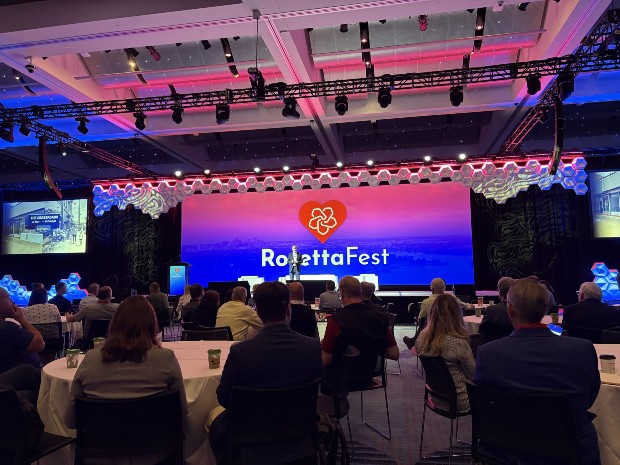
“How will you harness AI to improve health care in your local community?”
“The future of AI catalysts is avoiding the AI tax to local communities and instead creating a golden rule economy that bolsters these communities.”
“Communities can harness tech capabilities while maintaining local control and autonomy.”
“AI-resistant advantages include trust, culture, empathy and creativity. These are qualities that no algorithm can replace.”
“We stand at a unique moment where big forces are converging. Each of us controls a piece of America’s health care spending at this critical moment.”
“The AI hurricane is gathering strength. Communities who prepare now will excel; those who don’t will pay the price.”
The Great American Health Care Heist
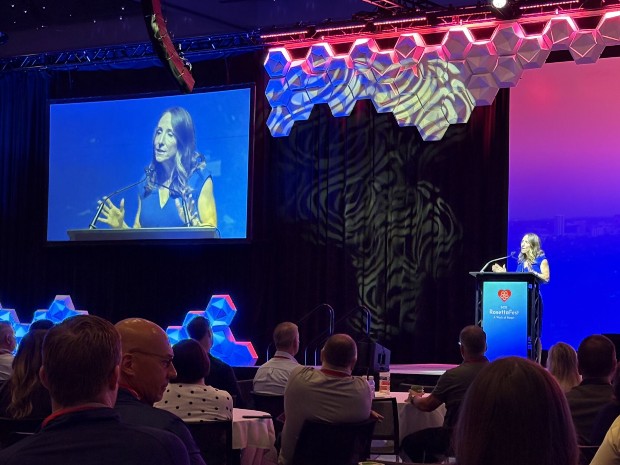
In another powerful keynote session, Chris Deacon previewed her new book "The Great American Healthcare Heist." She shared details about the rigged machinery of the U.S. health service care system, from insurer kickbacks to PBM games, hospital price manipulation to policy theater.
“This isn’t chaos, this is choreography. While we argue about how to fix it, the machinery keeps running in the background, skimming billions of dollars.”
“This is all sanctioned by those who are supposed to protect the American public. And it’s happening in plain sight.”
“Finger pointing distracts us from the bigger picture.”
“Once you see it, you can’t unsee it. Every major social shift in our country has happened because ordinary people decided they have had enough and refuse to be ignored. Health care will be no different.”
“The fight isn’t about one policy, it’s about a business model that prioritizes revenue over care.”
“Years from now, people will look back at this moment as the inflection point where health care collapsed under its own weight and became something new.”
Health care is local
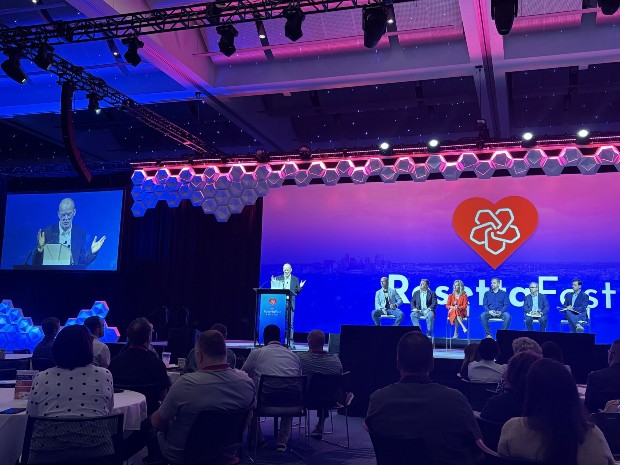
Dave Chase moderated a superstar panel featuring Bryce Heinbaugh, Josh Butler Adam Berkowitz, Drew Leatherberry, Christina King and Ben Bohonowicz, where they detailed how leaders across the country are working to build alliances with hospitals, providers, public sector employers, and community organizations to create lasting change. They each shared stories of success and spelled out strategies for convincing hospitals to share financial risk and turn provider networks into referral engines that help direct millions of health care dollars back into local communities.
“We’re sharing our stories in the hope that others can take these ideas home and implement them in their own communities.”
“Work to become known in your community as a mission driver who is focused on helping locally.”
“Most public entities are copy cats — they don’t want to be first, but once it starts happening, it creates a waterfall effect.”
“We need to move away from a zero sum mindset to an abundance mindset where we’re all winning together.”
“We have been pleasantly surprised by how many providers, physicians and clinicians are interested in working with us to create better care in our local communities.”
“When you’re working with hospital systems, find people who can get you in front of the right people. Cold calling won’t work.”
“Start small and look for hospital systems outside of the metro areas.”
“When you build these local plans, you have to make them replicable.”
Sneak (fiduciary) preview
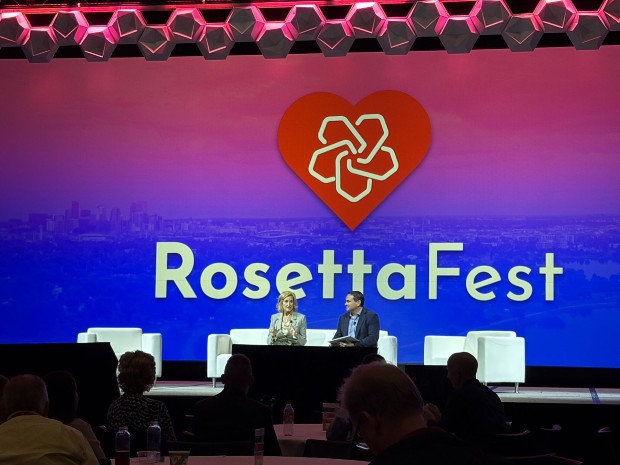
Barbara Delaney and Jeffrey Cullen took the main stage to discuss the rapidly converging worlds of retirement and health care fiduciary responsibility. They drew parallels between the retirement industry in recent decades and what is happening now — and in the future — in health care. Their conversation also detailed how ERISA expertise is becoming an unexpected competitive advantage in health care benefits consulting.
“Since we placed fiduciary standards on the retirement industry years ago, costs and fees have come down drastically. Imagine what impact it could have on health care.”
“In order to get rid of bad actors, you have to act as a fiduciary and expose them as the frauds that they are.”
“We had to change our entire business model in 2006. It hurt for a few years, but drastically paid off in the long run and our market share has grown dramatically.”
“Attorneys figured out what was happening in the retirement space and decided something had to be done.”
“There are so many entities changing money around in the health care space, that it’s hard to even track.”
“AI is providing the ability for this industry to actually comply with the CAA.”
“We already faced what you’re facing today. The monopolies slowly broke apart as more fiduciaries emerged. We dismantled our industry and rebuilt it the right way.”
“Someone asked me, ‘Do you really think you can change the health care and benefits system?’ I said, ‘We already did it and it can happen again.’”
Cracking the captive code
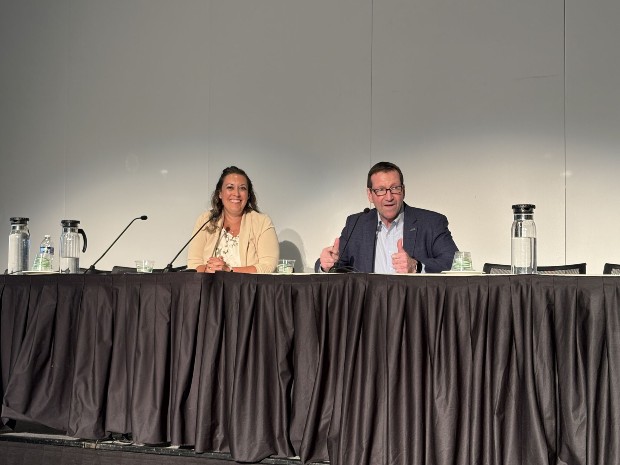
In a breakout session titled “Cracking The Captive Code,” Rachel Hawkins joined Rob Hamilton to dig into captive insurance, a strategy that is appealing to more and more small employers who are interested in self-funding options. They detailed both the reasons why captives work and many of the steps necessary to ensure success.
“Many small and medium sized businesses still aren’t self-funded — they need the people in this room.”
“80% of CFOs believe we’re in a health care crisis and many plan to shift the costs to employees. This is not sustainable.”
“I specialize in teaching employers how to move from fully insured to self-funded. It’s so rewarding to show them there’s a better way.”
“We need to put ourselves in the employers’ shoes. Health care is incredibly confusing and intimidating, so we need to make it as simple for them as we can through education and transparency.”
“The captive model makes sense for so many smaller employers — it provides a level of protection so they can self insure without taking on all of the risk.”
“I don’t want an employer having a rocky transition from fully insured to self-funding, because this is a long-term strategy. So we meet with our partners regularly and make sure our expectations are being met.”
“Self-funding is like teaching an employer a whole new language, so education and regular communication is key.”
“The member experience can be basically seamless if it’s handled the right way by the advisor, employer and partners.”
DPC works
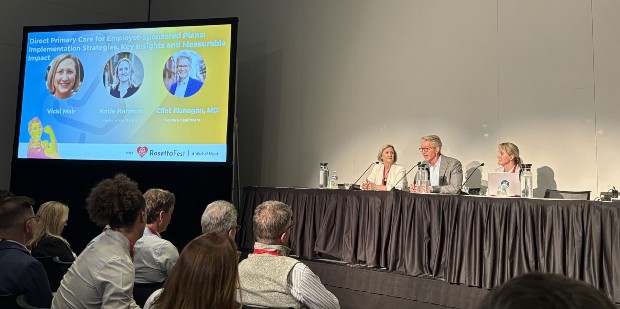
Clint Flanagan, MD, Katie Harmon and Vicki Mair discussed implementation strategies, key insights and measurable impacts for direct primary care in employer health plans during another breakout session. They offered a number of stats about the growth of DPC in recent years and the huge impact it can have on employers’ plans.
“Our health care system is broken: Employers are burdened by cost, physicians are burned out, and patients are unable to access care due to cost and availability.”
“In many parts of the country, it takes months to even find a primary care physician.”
“30% of people with employer coverage still have medical debt.”
“DPC resolves 90% of health need, reducing ER, urgent care and specialist claims.”
Employees enrolled in DPC have:
• 40% fewer ER visits
• 53% lower ER spend
• 20% fewer hospitalizations
“A lot of our new employees say they are coming to our school district specifically because of our benefits plan.”
“DPC has grown 800% among employer groups in less than a decade.”
Powerful partnerships
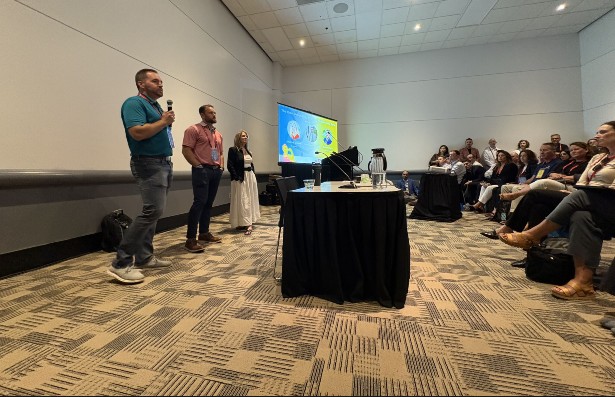
Kristine Scheer, Drew Leatherberry and Colton Storia shared strategies for choosing partners who serve your mission, during their standing-room-only session. The discussion was candid, vulnerable and filled with takeaways and practical advice.
“The secret to choosing the right partners is that there’s no secret. But there are many guiding principles.”
“One key is having your principles aligned with partners — not chasing the latest bright shiny object.”
“I have to trust the people I will be working with. The proof is not in the concept, but in the journey and the results.”
“Transparency is also key. Ask if you can see the PBM contract. Their answer is either a red flag or a green flag.”
“You are going to skin your knees. I can’t think of a single solution we’ve brought to a client that didn’t involve some degree of failure and reinvention.”
“You have to establish expectations from the very beginning.”
“What does a win look like for everyone involved? The member, the employer, the advisor and the partner?”
“When a partnership fails, don’t just point fingers. What could you and your team have done differently to make things better?”
“Ask partners to guarantee the things that matter. You should be actively involved in shaping those guarantees and making sure they align with your priorities and goals.”
© Arc, All Rights Reserved. Request academic re-use from www.copyright.com. All other uses, submit a request to TMSalesOperations@arc-network.com. For more information visit Asset & Logo Licensing.