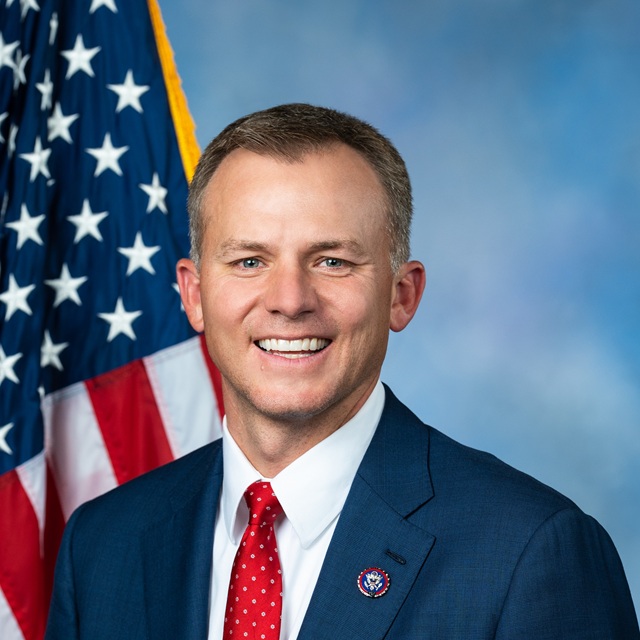
 Rep. Blake Moore, R-Utah. Credit: Leah Herman/U.S. House
The chances of passing the health account provisions cut out of the One Big Beautiful Bill Act in the next few months are probably low.
Rep. Blake Moore, R-Utah, a strong supporter of health savings accounts, health reimbursement arrangements and related health accounts, gave that assessment recently during a policy forum organized by the Employee Benefit Research Institute.
The health account topic has traditionally been one where Democrats and Republicans have been able to find common ground. Democrats and Republicans often team up to introduce bills that could make the HSA and HRA programs simpler and more generous.
But "there is significant opposition to HSAs from the Democratic upper dais" of the House Ways and Means Committee, Moore said.
Some House Ways and Means Democrats with fewer years in Congress "do like HSAs," Moore said. "They're willing to vote against their caucus or their committee leadership, but it just doesn't bode well for passage."
For now, Moore said, another big problem is that many health account proposals, such as his own proposal to create a kind of "Roth HSA," look as if they could cost the federal government a significant amount of tax revenue.
A third obstacle, he said, is that Congress used many of the reasonably popular "pay-fors" — ideas for cutting federal spending or increasing federal revenue — to pay for the tax cuts and tax stabilization provisions in OBBBA, and passing another bill that requires a large amount of pay-fors "is going to be tough," Moore said.
"So, there are still glimmers of hope that there would be movement, given that there's bipartisan support, but HSAs aren't going to be a priority of Democrats for the next few months," Moore said.
Rep. Jimmy Panetta, D-Calif., a Democrat on the House Ways and Means Committee who has helped introduce bipartisan health account bills, told EBRI forum attendees that he thinks ideas for improving health accounts are still gaining momentum.
Even though many health account provisions were taken out of OBBBA, the fact that they were in the House version "lays the foundation for where we can go," Panetta said.
Panetta said EBRI can help by showing Democrats who are skeptical about health accounts, and who think they mainly serve as tax shelters for high-income people, that they also help many low-income and middle-income people pay health care bills.
OBBBA changes: The OBBBA version that first passed in the House included 14 health account provisions.
One provision would have put individual coverage HRAs — which are now based on federal regulations — in federal law and made ICHRA rules more flexible.
A second provision that died would have doubled HSA contribution limits for individuals with annual income under $75,000 and couples with annual income under $150,000.
A third abandoned provision could have helped a worker with unspent flexible spending account cash roll some of the cash into an HSA.
When the Senate began considering the OBBBA package, the health account provisions disappeared.
Eventually, Congress passed a version of OBBBA that included three health account provisions. The provisions:
♦ Let HSA holders use some of the HSA cash to pay direct primary care practice membership fees.
♦ Let people with major medical coverage with a very high deductible use HSAs, even if the enrollee's maximum annual out-of-pocket spending could exceed the usual HSA-program limit on annual out-of-pocket spending at the high-deductible health plans classified as being compatible with HSAs.
♦ Let HSA holders use HSA cash to pay for the "first dollar" of telehealth services claims, long before they have gotten anywhere close to meeting their deductibles.
OBBBA history: Roy Ramthun of HSA Consulting Services — a former Treasury Department official who helped create the HSA program — said that, at one point, it looked as if the Senate might pass a version of OBBBA without any health account provisions in it at all.
"The industry had to work very hard to get those final three provisions into the final bill," Ramthun said. "It took a lot of handholding.
Members had to speak to the Senate Finance chairman and to the Senate leadership and say, "'I'm not going to vote for this bill unless there are some HSA provisions in there,'" Ramthun said.
© Arc, All Rights Reserved. Request academic re-use from www.copyright.com. All other uses, submit a request to TMSalesOperations@arc-network.com. For more information visit Asset & Logo Licensing.