 Credit: Semi/Adobe Stock
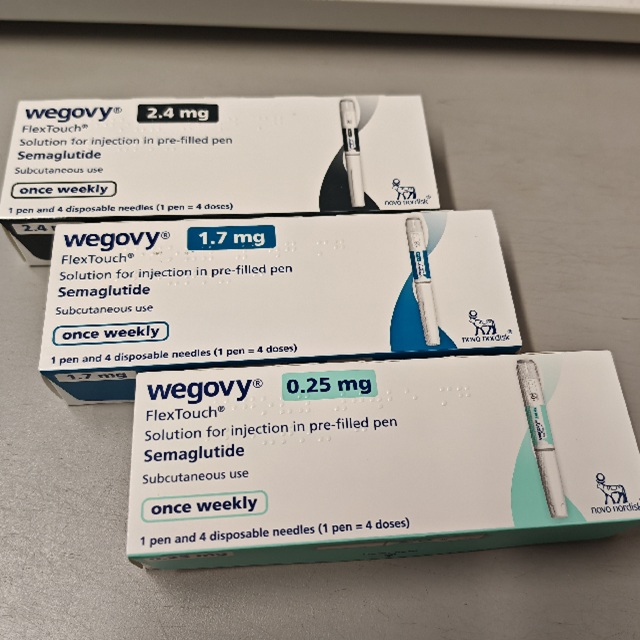
Roughly 5.1% of U.S. adults may now be using GLP-1 agonists to try to control their weight, according to eHealth.
Another 33% of U.S. adults told eHealth that they wanted to try drugs like Wegovy once the price comes down, and 15.4% said they were not sure what they want to do about the drugs.
EHealth — one of the first companies to sell insurance on the web — based those figures on results from a survey of 1,508 adults ages 18 and older.
The main focus of the survey was on what Americans are thinking about the current enrollment period for 2026 health coverage.
One highlight: About 23% of the participants said what surprised them the most this year was the low cost of the monthly premiums.
What it means: The number of adults taking GLP-1 agonists could soon be six times bigger than the number using the drugs today.
The backdrop: About 74% of the U.S. adults ages 20 or older are overweight or obese, according to the National Center for Health Statistics.
A RAND survey team reported earlier this year that 12% of all U.S. adults say they had already tried using GLP-1 agonists to control their weight, and that 26% of all of the survey participants were interested in the idea of taking the drugs.
President Donald Trump recently announced that his administration expects drug manufacturers to offer U.S. consumers lower prices for the drugs.
Novo Nordisk could sell Wegovy through TrumpRx.gov, a new prescription drug sales website, for $350 per month, down from $1,350 per day today.
Budgets: When eHealth asked the survey participants how much they were willing to spend on the new generation of weight-loss drugs, half said they were willing to spend 50% to $300 per month.
Only 19% put a $50 cap on GLP-1 agonist spending. Just 31% were willing to spend more than $300 per month on the drugs.
Spending plan implications: The United States has 267 million adult residents.
If about one-third of U.S. adults spend an average of about $200 per month out of pocket on GLP-1 agonists and related types of drugs, that would imply total U.S. GLP-1 agonist out-of-pocket spending amounting to about $220 billion per year, on top of what insurers and employer-sponsored health plans pay for the drugs.
BioSpace has published figures suggesting that U.S. patients, insurers and health plans spent about $45 billion on the drugs in 2024.
David Joyner, who's now the CEO of CVS Health, predicted in July 2024 that, at 2024 prices, total U.S. GLP-1 agonist spending could eventually exceed $1.2 trillion per year.
© Arc, All Rights Reserved. Request academic re-use from www.copyright.com. All other uses, submit a request to TMSalesOperations@arc-network.com. For more information visit Asset & Logo Licensing.