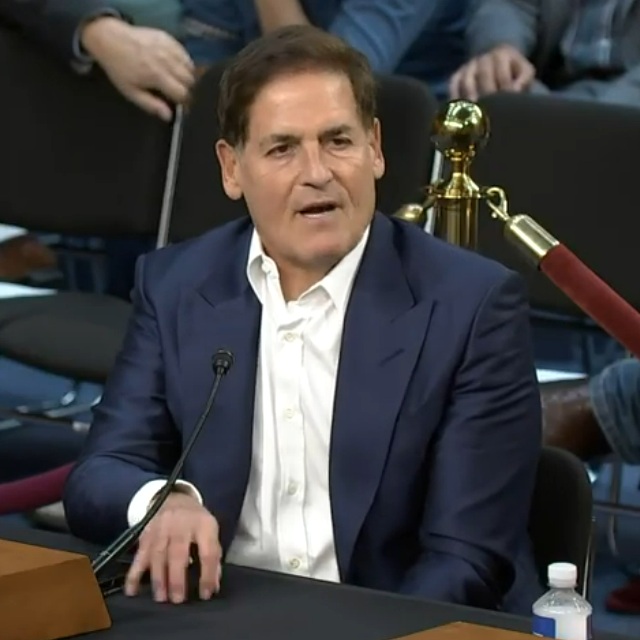
 Mark Cuban testified Wednesday on health care service "shoppability" at a hearing organized by the U.S. Senate Special Committee on Aging. Credit: Sen. Roger Marshall
Pharmacy entrepreneur Mark Cuban’s running battle with pharmacy benefit managers is now a military engagement.
“If you want to cut the cost of health care, making sure the pharmacies serving the military off base are paid a little more while the PBM is paid a lot less is a good place to start,” he recently posted on social media. “Taxpayers would save a ton of money just paying pharmacies the standard cash price and a small processing fee to the PBM.”
The Department of Defense provides a pharmacy benefit to more than nine million beneficiaries through TRICARE. In fiscal year 2023, TRICARE spent more $8 billion on prescription drugs for its beneficiaries, according to the Government Accountability Office.
The former owner of the NBA’s Dallas Mavericks founded the online pharmacy Cost Plus Drugs in 2022 in an effort to lower prices for generic drugs by removing middlemen such as PBMs and moving to a cost-plus pricing strategy. The company sells a limited selection of medications directly to consumers at cost plus a 15% markup
Cuban has long criticized PBMs for driving up drug costs through rebate and incentive misalignments, as well as squeezing independent pharmacies through unfair reimbursements and audits. Earlier this fall, he announced that Cost Plus Drugs will participate in Trump Rx, the administration’s drug price transparency initiative. The company will provide TrumpRx access to its application programming interface, enabling the platform to pull real-time pricing data. Sharing prices on TrumpRx will increase visibility, drive higher volumes and allow further price reductions to benefit consumers, Cuban said.
Last week, Cuban said he was talking to Humana about cooperating on direct-to-employer programs that would bypass traditional layers in the drug supply chain. Humana is expanding its pharmacy business through its CenterWell division. Cuban and Humana CEO Jim Rechtin said this move could increase pressure on larger pharmacy middlemen. Although Humana is best known for its Medicare business, Rechtin is working to transform the health insurer into a consumer health care company.
“If you look at how the system operates end to end and you think about all the different players and all the different systems, we have the manufacturer, we have a hub, we have a PBM, we have a distributor, we have a pharmacy -- and that doesn't even name everybody that's in the system, end to end,” Rechtin said, according to Forbes. “The question is, how much value is being added in each of those at each of those steps? And then, how much does it cost? Do you really need all of that cost? And is it really all adding value?”
© Arc, All Rights Reserved. Request academic re-use from www.copyright.com. All other uses, submit a request to TMSalesOperations@arc-network.com. For more information visit Asset & Logo Licensing.