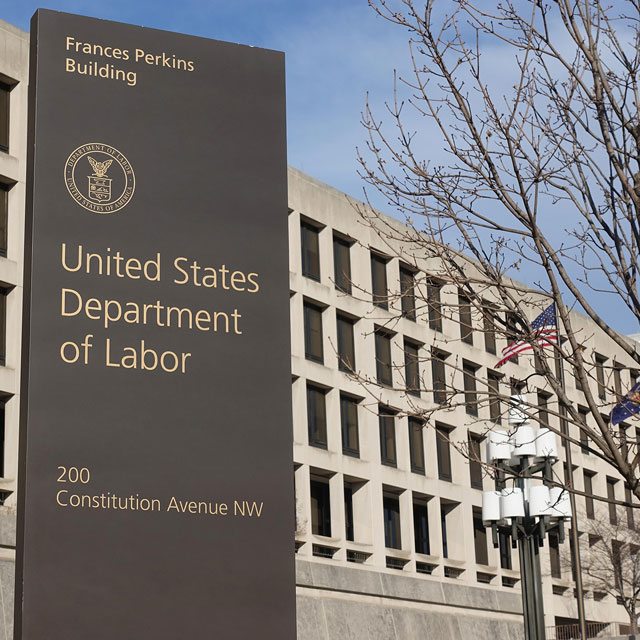
The U.S. Department of Labor on Friday filed an amicus brief seeking to clarify the legal framework for pension risk transfers (PRTs) — which happen when a company shifts its defined benefit pension plan’s financial obligations and risks (like longevity and interest rates) to a third party. Filed as part of an ongoing effort to stop regulation by litigation, the brief in Konya v. Lockheed Martin reiterates the appropriate standards for derisking transactions.
The amicus brief marks the department’s first public position on pension risk transfer since a wave of class action litigation began in 2024. In it, the department states that fiduciaries enjoy deference as long as they engage in the pension risk transfer process in a way that demonstrates prudence and loyalty. The department also claims that plaintiffs in this particular case misapplied retirement law and three decades of departmental guidance by claiming Lockheed Martin breached its fiduciary obligations under the Employee Retirement Income Security Act (ERISA) through their pension risk transfer transactions.
The case centers on Lockheed Martin selecting Athene Annuity and Life Company for a pension risk transfer involving approximately $9 billion in pension liabilities. Retirees argue that Lockheed chose private-equity-owned firm to save money at the expense of their retirement security.
“The Department acted … to protect the voluntary employee benefit system as Congress intended,” Deputy Secretary of Labor Keith Sonderling said in a statement. “ERISA expressly provides an off-ramp for employers making the business decision to annuitize their defined benefit obligations. The ability to engage in PRTs is necessary to ensure that employers will continue to offer quality retirement benefits to American employees in the first place.”
Related: Gen Z starts retirement saving at 23, nearly 20 years ahead of boomers
The amicus brief “reinforces ERISA as law of process in which plan fiduciaries have discretion and flexibility to make informed judgment calls,” added Assistant Secretary of Labor for Employee Benefits Security Daniel Aronowitz. “ERISA does not allow hindsight second-guessing or Monday-morning quarterbacking of discretionary fiduciary decisions.”
According to the amicus brief, “when left unencumbered, PRTs benefit employers and participants/beneficiaries alike, which is why ERISA provides for them (and the Secretary supports business’ right to engage in them). When PRT decisions are forced through the crucible of federal-court litigation, however, those upsides are (at best) obstructed or (at worst) obliterated … if employers are thwarted from conducting PRTs because of the ever-present specter of litigation, the delicately calibrated balance Congress established between federal and state regulatory prerogatives will deteriorate.”
Additionally, the department made clear that the decision to enter a pension risk transfer is a settlor function reserved for the plan sponsor. As a result, according to DoL officials, it does not implicate fiduciary duties under ERISA, which are only triggered when the plan sponsor chooses an annuity provider.
© Arc, All Rights Reserved. Request academic re-use from www.copyright.com. All other uses, submit a request to TMSalesOperations@arc-network.com. For more information visit Asset & Logo Licensing.