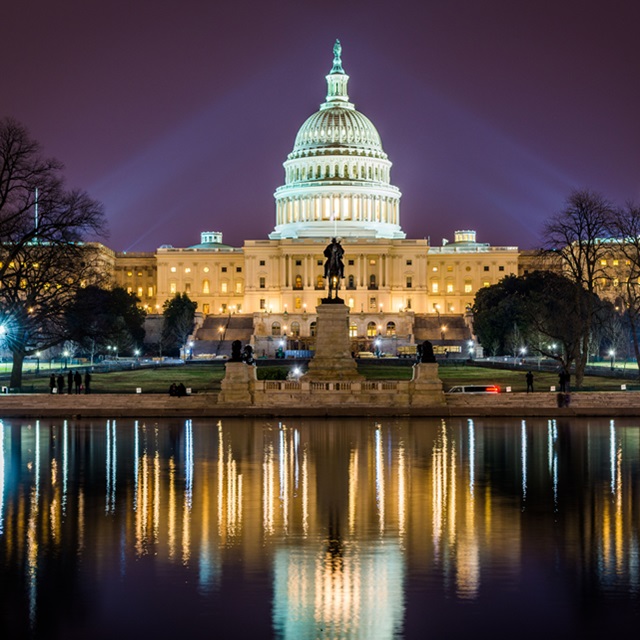
 The U.S. Capitol. Credit: Christian Hinkle/Shutterstock
Members of the U.S. House today began debating a giant federal appropriations "minibus" package that includes two employer pharmacy benefit manager transparency provisions and $191 million in funding for the U.S. Labor Department's Employee Benefits Security Administration.
The House Rules Committee today approved a rule providing for consideration of the Consolidated Appropriations Act, 2026 package by a 9-4 vote and combined that package, which provides funding for federal health programs, federal education programs and some other programs, with another giant appropriations package, which provides funding for federal financial services, national security and international affairs programs.
The House could vote on final passage of the package later today.
The House streams video of floor proceedings here.
The package: The PBM provisions and EBSA funding provision in the CAA, 2026 package are small parts of a giant $1.2 trillion health, education and labor program funding package.
House leaders today combined that package with another package that funds federal financial services, national securities and international relations activities.
The CAA, 2026 consideration resolution: Republicans hold 218 seats in the House, and Democrats hold 213 seats. The resolution letting debate on the CAA, 2026 package begin on the House floor passed by a 214-213 vote.
All Republicans who participated voted for consideration of the package, and all Democrats opposed consideration. Four Republicans did not vote.
House Republicans ended up reversing many of the budget cuts proposed by the administration of President Donald Trump in June, but Democrats have been pushing for consideration of an amendment that would extend the high level of premium subsidies that were available in 2025 to users of individual and family health coverage purchased through the Affordable Care Act public exchange system The temporary ACA premium subsidy boost expired Dec. 31, 2025, and created what critics have called a "subsidy cliff."
Democrats also want the House to consider amendments that would impose new restrictions on U.S. Immigration and Customs Enforcement efforts and keep the United States from using funds to invade any country that's in the North Atlantic Treaty Organization.
The PBM provisions: One of the PBM provisions would require employer health plan fiduciaries to monitor PBMs carefully and require the PBMs and other entities involved with managing prescription benefits to send the plan fiduciaries detailed activity reports.
Another PBM provision would require PBMs and other service providers to pass any rebates or other drug discounts they negotiate on to the employers.
The Pharmaceutical Care Management Association, a group for PBMs, has opposed the PBM measures, arguing that they would add administrative burdens for businesses and increase costs for both patients and employers.
The National Association of Benefits and Insurance Professionals is supporting the PBM provisions, saying it believes the provisions would help employers better understand the true cost of coverage.
The Partnership for Employer-Sponsored Coverage is also supporting the PBM provisions.
© Arc, All Rights Reserved. Request academic re-use from www.copyright.com. All other uses, submit a request to TMSalesOperations@arc-network.com. For more information visit Asset & Logo Licensing.