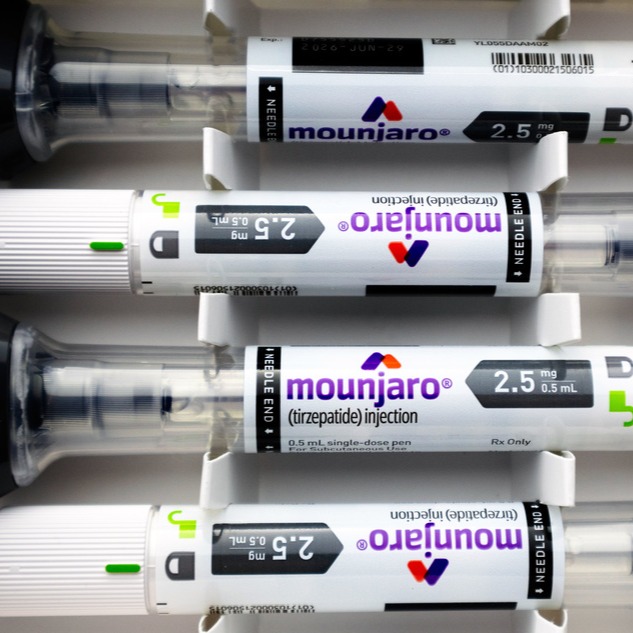
It's hard to escape the buzz – make that a roar – over the advances in GLP-1 medications like Ozempic and Wegovy.
They've become a boon for controlling diabetes, their original purpose. But the real public excitement is over their effectiveness at managing one of its causes – obesity. Their exploding popularity and price tags (between $936 to $1,340 monthly before insurance, rebates and discounts) raise tough questions for employers: Is coverage under employers' health plans something plan sponsors should provide? For diabetes, or obesity, or both? Is it sustainable to offer it for the long term?
Evaluating all the implications for the organization's and individual employees' immediate and long-term health in order to make the "right" decision is weighing employers down.
Understanding risks and rewards related to GLP-1s for weight loss
Obesity has become an epidemic in the U.S., with a prevalence of 40.3% of the population; 9.4% for severe cases. It impacts our nation's health as a driver of heart disease, high blood pressure, Type 2 diabetes, some cancers, sleep apnea and more.Today, 54% of Americans use GLP-1s now or want to; they're likely not aware of the medications' risks, ranging from possibly significant loss of lean muscle mass to the potential of thyroid tumors, kidney injury and mental health impacts.
Increasingly, employees see access to GLP-1s as a must-have benefit. One survey found that 73% of workers ranked it as important for taking or staying at a job; 31% without it who can't afford it on their own would change jobs for access.
Employers see the drugs as an important differentiator for recruitment and retention purposes. Importantly, they also have a potentially outsized role in supporting employee wellness, which is integral to everything from productivity growth to lower absenteeism and presenteeism.
But employers also have to deal with the financial implications of coverage when their health benefits costs are under unremitting pressure. In 2026, medical cost trends are expected to rise between 7% and 9%, led by an expected jump in prescription drug costs of 10% to 12% – largely driven by GLP-1 demand.
A framework for decision-making
Here are three considerations for designing a coverage policy that is aligned with everyone's needs.
1. The cultural fit – in general and for wellness. Determining where the employer is and where it wants to go is essential. A good backdrop can be established by exploring key questions:
- Is the purpose a viable weight loss solution or just a response to societal pressures and norms around obesity?
- Will coverage parameters require supports like diet and exercise drive sustainable weight loss?
- Do current and prospective employees want coverage added to their health benefits, and what generational and cultural differences play into their preferences?
- How will coverage affect recruitment and retention, and will the associated premium increases have a role and be sustainable?
But the upfront costs make financial planning an imperative. These medications account for about 8.9% of claims annually. But not covering GLP-1s is risky, too. Medical costs are $1,800 to $3,097 higher for obese workers. Conversely, one study shows medical costs 7% lower for employees on a GLP-1 regimen, balanced by productivity boosts of 10% to 21%.
Clinical and cost benefit analytics are essential to this evaluation, informing how coverage for weight loss might impact costs related to obesity-related conditions. Modeling shows how coverage changes like prior authorization criteria or weight thresholds impact costs. Also important is determining how coverage combined with related wellness initiatives, like nutrition coaching, impacts long-term costs and health outcomes.
3. A deep and broad data dive. Other types of analytics are also valuable to bolster decision-making. A best-in-class broker should be able to provide access to relevant proprietary modeling tools. Worth considering:
- Prevalence and cost analysis. Claims and health risk assessment data help establish the scope of the obesity problem in the employee population. It's helpful to quantify current utilization of and spending on GLP-1 treatments and understand the clinical reasons for use.
- Usage patterns. Data should also be examined for adherence and discontinuation rates. It's also important to understand usage habits by segmenting the user population, looking at factors like duration of use.
- Supply and demand trends. The long-term strategy should be informed by market shifts, including supply, pricing and the development of new drugs or alternative treatments.
Of course, other elements are key to decision-making: Strategies to ensure employee engagement. Deployment of medical management tools like prior authorization and quantity limits, and benefit limits. Eligibility requirements. Clinical documentation of medical necessity. Guidelines for treatment duration.
Ultimately, the decision to include or exclude GLP-1 coverage does not resolve the underlying health care crisis around obesity. These medications are one tool – not a solution. Employers committed to sustainable workforce health must also invest in the conditions that drive obesity in the first place: workplace cultures that support movement and stress management, access to nutrition resources, mental health services, and benefits designs that incentivize prevention rather than intervention. Coverage decisions matter, but they're only one piece of a much larger puzzle. Employers must evaluate the tradeoffs and if the cost is worth the cure. The organization's sustained health over the long haul will be the ultimate, deciding factor.
Dr. Kryijztoff (Kryz) Novotnaj, DNP, MPH, CPHIMS, is the Chief Clinical Informatics Officer (CCIO) for global insurance brokerage Hub International.
Kryz has over 20 years of experience in employee benefits, healthcare and wellness. He previously held roles in executive clinical consulting and health informatics for regional and national consulting firms. Kryz has led several key initiatives around analytic reporting using clinical methodology that has assisted employers with understanding their population's health/illness burden.
Kryz holds multiple credentials, including a Practical Nurse (LPN) from Gurnick Academy of Medical Arts, a Registered Nurse (RN) from Excelsior College, a BSN in Nursing from the University of Cincinnati, and an Advanced Practice Registered Nurse (ACNP) from Gonzaga University with a concentration in acute care nursing practice, three designations as a Certified Wellness Specialist (CWS), Certified Professional in Health Information Management Systems (CPHIMS) and Certified Corporate Nutrition Professional (CCNP). Kryz possesses a B.S. in Applied Science in Healthcare Management from Waldorf College, an M.S. in Public Health with emphasis in Clinical Epidemiology and Biostatistics from University of Liverpool, UK. In 2019, Kryz completed his Doctorate in Nursing Practice at the University of San Diego with an emphasis in infectious disease and health informatics and is pursuing his second PhD in Psychiatric Nursing from Chaminade University of Honolulu. (2025).
Nelly Rose, PharmD, is the national pharmacy practice leader for global insurance brokerage Hub International. She is an accomplished pharmacy consulting executive with more than 15 years of experience transforming pharmacy benefit strategies. She leads with vision, innovation and impact – driving enterprise-wide clinical solutions, shaping market trends, and mentoring the next generation of pharmacy leaders.
Throughout her career, she has held progressive leadership roles across nationally recognized healthcare organizations, including pharmacy benefit managers, community care settings, health systems and consulting firms.
Her expertise spans clinical strategy, financial planning, and enterprise transformation, with a deep understanding of the complex prescription drug ecosystem.
© Arc, All Rights Reserved. Request academic re-use from www.copyright.com. All other uses, submit a request to TMSalesOperations@arc-network.com. For more information visit Asset & Logo Licensing.