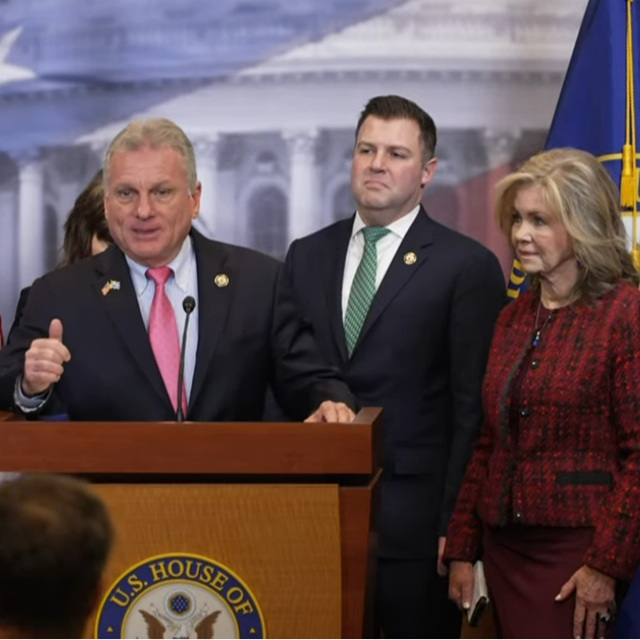
 Rep. Buddy Carter, R-Ga., talked about the passage of PBM legislation in the Consolidated Appropriations Act 2026 Wednesday in Washington as Rep. Ryan Mackenzie, R-Pa., and Sen. Marsha Blackburn, R-Tenn., look on. Rep. Diana Harshbarger, R-Tenn., who is standing behind Carter in this picture, also participated. Credit: Rep. Buddy Carter, R-Ga./YouTube
Employers' pharmacy benefit managers now face a new federal PBM transparency mandate and a new federal rebate pass-through mandate.
Rep. Buddy Carter, R-Ga. — a longtime pharmacist who helped move the new employer PBM laws through Congress — said Wednesday that he plans to turn to getting the "Pharmacists Fight Back [in Federal Employee Health Benefit Plans Act]" bill through the House.
The bipartisan bill would affect how the PBMs that manage prescription benefits for federal employees relate to pharmacists.
A PBM serving federal employees would have to pay a pharmacy a price equal to at least the "national average drug acquisition cost" for the drug, plus a dispensing fee equal to 4% of the price of the drug, up to a maximum of $50.
The PBM could not make a participant in a federal employee plan use a pharmacy affiliated with the PBM, or any other specific pharmacy, and it could not use marketing or other practices to steer plan enrollees away from using some in-network pharmacies and toward using other in-network pharmacies.
The bill would not have a direct effect on employer plans other than plans for federal employees, but it could serve as a model for future legislation that would affect private-sector employer plans.
Carter talked about the bill during a press conference that he and Rep. Marsha Blackburn, R-Tenn., held in the U.S. Capitol to celebrate enactment of the employer PBM provisions in the Consolidated Appropriations Act 2026 spending package. President Donald Trump signed the CAA 2026 package into law Tuesday.
Carter's office posted a video recording of the press conference on YouTube.
Carter's thinking: Carter said at the press conference that he believes the new laws requiring PBMs to give detailed prescription plan operations reports to employers will help bring down prescription costs and make sure employers get their fair share of any discounts the PBMs obtain from drug manufacturers and wholesalers.
"They're going to demand that they share those discounts," Carter said.
Carter said he cares about the PBM issue because he was the one who stood at the pharmacy counter and told patients what their prescriptions would cost and saw mothers wondering how they would pay for antibiotics for their children.
"I said, 'It's my goal to do something about that,'" Carter said. "The PBMs add no value to this system at all."
Carter told reporters at the press conference that many of the big U.S. health insurers own big PBMs.
"When you say PBMs, you might as well say insurance companies," Carter said. "Because it's the same thing."
Harshbarger's thoughts: Rep. Diana Harshbarger, R-Tenn., another advocate for PBM legislation, also spoke during the press conference and said she wants to hold the "middlemen accountable."
The vertical integration of health insurers, PBMs and other types of business stifles competition, Harshbarger said.
"You can't lose $100 on each prescription and stay in business," she said.
Harshbarger expressed pride in the strength of her support for independent pharmacies.
"You know you're an effective legislator when lobbyists see you coming down the hall and they turn around and go the other way," Harshbarger said.
Mackenzie's bill: Rep. Ryan Mackenzie, R-Pa., came to the press conference podium to say he also has PBM legislation in the pipeline.
"I have legislation that would make PBMs a fiduciary," Mackenzie said.
Fiduciaries are supposed to put the interests of plans and plan participants first and may face lawsuits over their efforts to comply with a fiduciary standard.
"I think that it is critically important to make sure that PBMs have the same interests as their customers and, ultimately, the patients they serve," Mackenzie said.
The backdrop: The PBMs say they are under fire because they have succeeded at holding prescription drug cost increases down, especially for generic drugs, and at squeezing other players' profit margins.
They have predicted that California's PBM transparency and fiduciary requirements could increase an employer plan's costs by $1,800 per participant per year if fully implemented.
West Virginia, meanwhile, recently posted a report showing that group health insurance providers believe a PBM rebate pass-through mandate there cut 2026 rate increases to an average of 12.6%, from what might have been an average increase of 19.5% without the mandate.
© Arc, All Rights Reserved. Request academic re-use from www.copyright.com. All other uses, submit a request to TMSalesOperations@arc-network.com. For more information visit Asset & Logo Licensing.