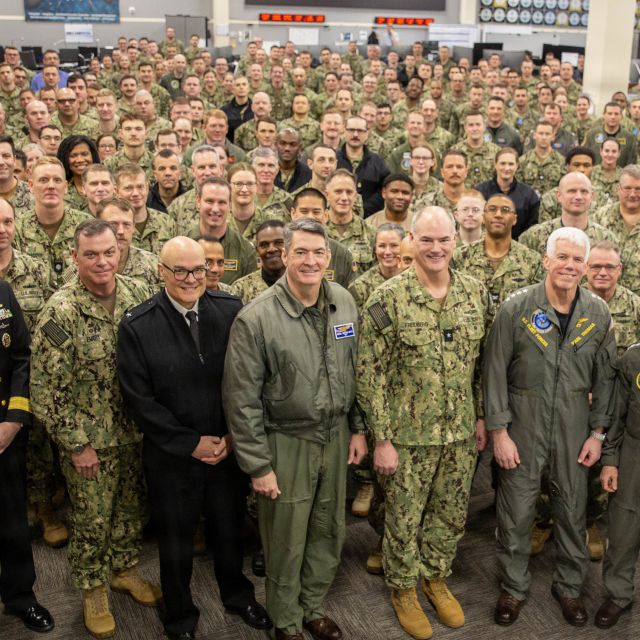
 U.S. Navy Reserve sailors gathering for a group photo at a training program at the Navy Warfare Development Center in Norfolk, Virginia. Credit: Ian Delossantos
U.S. military forces are now involved in a fierce, complicated crisis in the Middle East.
At press time, officials at the Pentagon were not saying whether they had called many members of the National Guard or the Reserve to active duty, or whether there were any thoughts about doing that in the near future.
But the news is causing human resources and benefits teams throughout the country to look for their old guides to the Uniformed Services Employment and Reemployment Rights Act and Servicemembers Civil Relief Act — the federal laws that protect the jobs, health benefits, retirement benefits and financial arrangements of citizen soldiers who end up leaving their civilian jobs to provide military service.
Benefits specialists who are familiar with USERRA and SCRA emphasize the importance of watching official government presentations on the topic and getting competent legal and accounting advice whenever questions about USERRA and SCRA are involved.
"USERRA provisions are highly technical in nature," OneAmerica warns employers in a disclaimer accompanying its guide to USERRA rules for retirement plan sponsors. Plan sponsors should consult with their attorney, accountant or tax advisor to ensure proper compliance with the act."
USERRA: USERRA protects activated workers' jobs and benefits.
USERRA requires employers of all sizes to keep the jobs of workers who leave for military service open for five years, unless the workers' jobs were temporary or the employers' circumstances have changed enough to make reemployment of the workers impossible.
The law also requires employers of all sizes to provide health benefits continuation benefits that are similar to COBRA benefits.
If a permanent worker goes on active duty for up to 30 days, the employer must hold the amount the worker pays for health coverage steady.
For military leave lasting from 31 days to 24 months, the plan can charge an amount equal to 102% of the full premiums for coverage for continuation coverage.
If a permanent worker who's part of a retirement plan goes on active duty and returns to the employer within five years, the employer must let the worker return to the retirement plan.
A worker who returns to a retirement plan has a period equal to three times the period of military duty, up to a maximum of five years, to make up for employee contributions missed during the period of military duty. The employer must provide matching contributions for the returning worker's make-up contributions.
SCRA: SCRA protects citizen soldiers against legal actions involving rental agreements, credit credits, automobile leases and income tax payments while they are on active duty.
In some cases, for example, an activated citizen soldier can reduce interest rates on consumer debt and mortgage loans to 6% while on active duty.
The citizen soldier can also defer premium payments on some commercial life insurance policies during the period of military service and for two years after that.
Information sources: The government has a strong interest in helping employers understand USERRA. It has posted a collection of materials related to the topic, including a webinar video, here.
U.S. Navy Reserve sailors gathering for a group photo at a training program at the Navy Warfare Development Center in Norfolk, Virginia. Credit: Ian Delossantos
© Arc, All Rights Reserved. Request academic re-use from www.copyright.com. All other uses, submit a request to TMSalesOperations@arc-network.com. For more information visit Asset & Logo Licensing.