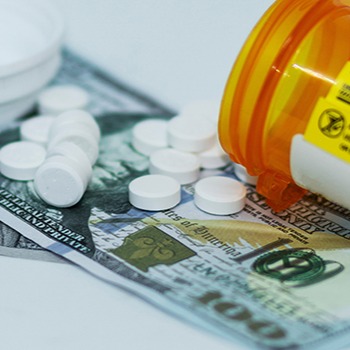
More than 8 in 10 insured patients want health care providers to automatically select lower-cost options when clinically appropriate, the 2026 State of Drug Access survey from RazorMetrics found. In addition, nearly two-thirds of respondents taking five or more medications describe the experience as confusing, side-effect-heavy or difficult to manage.
"Medicine always has been and always will be patient-first," said Dr. Siva Mohan, the company's president and chief medical officer. "Our national study makes clear that patients want their own physician to automatically select lower-cost, clinically equivalent options for them."
For patients managing five or more medications, price uncertainty and safety risks compound each another.
"Patients don't want more tools, apps or the responsibility of navigating nuanced health decisions on their own," Mohan said. "They want costs and risks addressed earlier, automatically and clinically by their personal physician, working for them in the background before they ever know there's a problem."
Among other findings:
- Nearly half of respondents find patient-driven health care apps and discount platforms hard to navigate, with many describing the process as overwhelming or inconsistent.
- More than half of insured patients don't trust that they are paying the lowest available price. Among those who report price confusion, 68% don't trust pricing outcomes.
- Affordability works best when handled inside care delivery, before prescriptions reach the pharmacy counter, rather than shifted to patients after the fact.
- For households managing five or more medications per month, affordability stress compounds across multiple therapies, increasing both financial strain and the burden of medication management. Patients describe tracking when to take each medication, when to refill prescriptions and what each one does as a job in itself, with side effects and confusion often leading to missed or adjusted doses.
- Forty-three percent of respondents were prescribed a drug in the last 12 months that was too expensive, and 16% leave prescriptions unfilled or ration medication when a drug is too expensive,
- Nearly 4 in 5 patients experience sticker shock at prices below $250, reinforcing that affordability stress affects everyday medications.
"These findings point to a clear conclusion," Mohan said. "The pharmacy system repeatedly asks patients to adapt to its complexity, while patients consistently ask the system to absorb it. Programs that rely on patient initiation are destined, by design, to underperform. Predictable pricing, proactive optimization and physician decision-making consistently outperform reactive, patient-driven models."
© Arc, All Rights Reserved. Request academic re-use from www.copyright.com. All other uses, submit a request to TMSalesOperations@arc-network.com. For more information visit Asset & Logo Licensing.