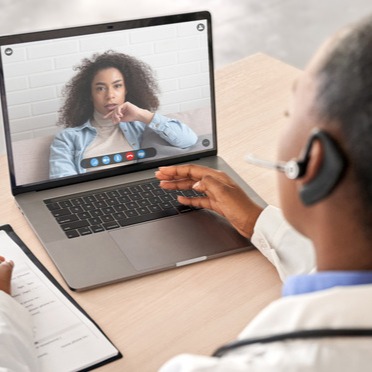
The use of telemedicine has not resulted in significantly increased visits and medical spending across various payer types, according to new research led by UCLA and reported in JAMA Network Open.
At the onset of the COVID-19 pandemic, the Centers for Medicare & Medicaid Services introduced payment parity with in-person visits, waived geographic restrictions and eliminated out-of-pocket cost sharing, among other policy changes. Lawmakers are debating whether to permanently extend or modify these policies when they expire next year.
Previous research raised the possibility that telemedicine could worsen health disparities, and other studies have found geographic differences in telemedicine use. The UCLA study, however, alleviates concerns that telemedicine expansion during the COVID pandemic would lead to large increases in utilization and spending.
"Our findings suggest neither prediction came true on a national scale," said Dr. John Mafi, an associate professor in the David Geffen School of Medicine at UCLA. "As telemedicine use grew, visits and spending in heavy users tracked closely with patterns in lighter users. That is reassuring for anyone worried about ballooning costs but more sobering for anyone hoping telemedicine would close longstanding gaps in access. At least so far, it looks more like a substitute for in-person care than a true expansion of it."
Researchers found that telemedicine visits dropped by 2.4% and spending declined by 0.5% among all insurance types from 2019 through 2023. They found no significant changes across the subgroups they examined. Reduced spending was found among urban populations (2.3%), Medicaid recipients (2.5%), Medicare Advantage participants (3%) and socially vulnerable populations (1.5%).
They also found 3.8% higher spending in rural areas, 1.1% more spending among commercially insured patients, 1% more expenses among people with Medicare fee-for-service insurance and 4.5% higher spending among people who were the least socially vulnerable. None of the changes are statistically significant, researchers said.
Dr. Katherine Kahn of the UCLA medical school said this research is only a starting point as policy continues to evolve.
"Our analysis runs only through late 2023, when telemedicine use was still settling into a new equilibrium," she said. "Much more work is needed to understand telemedicine's longer-term effects on quality of care, health outcomes and spending, and whether those effects differ across the diverse populations who depend on it. Policymakers should keep monitoring closely as the evidence base matures."
© Arc, All Rights Reserved. Request academic re-use from www.copyright.com. All other uses, submit a request to TMSalesOperations@arc-network.com. For more information visit Asset & Logo Licensing.