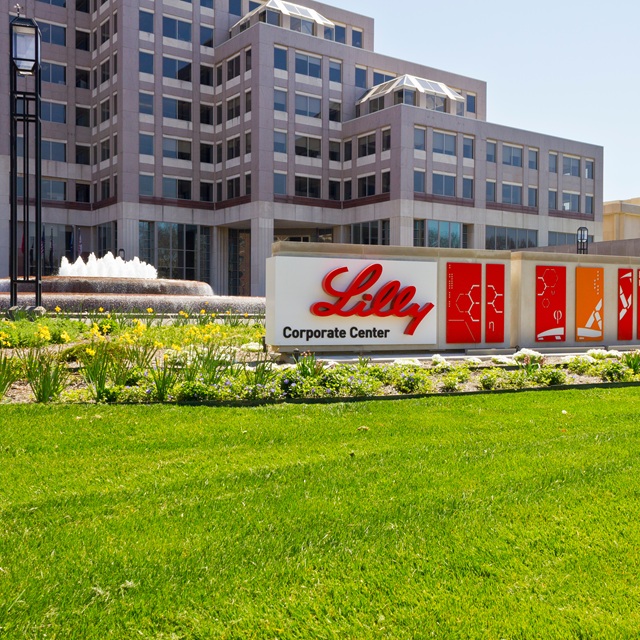
 Eli Lilly's headquarters in Indianapolis. Credit: jetcityimage/Adobe Stock
Eli Lilly and Company has agreed to acquire three vaccine developers in separate deals valued at nearly $4 billion, the drugmaker announced on Tuesday. The acquisitions of Cuerevo, LimmaTech Biologics and Vaccine Company will expand Eli Lilly's research and development efforts in infectious diseases.
"These acquisitions reflect a deliberate strategy to prevent disease at its source rather than treat its consequences," said Daniel M. Skovronsky, M.D., Ph.D., chief scientific and product officer and president of Lilly Research Laboratories. "Decades of evidence now link common infections to diseases that potentially emerge years later, including neurological disease, cancer and infertility. And as antimicrobial resistance erodes our ability to treat bacterial infections, vaccines are increasingly the only path to prevention. Combining these companies' platforms and teams with Lilly's global scale positions us to change that trajectory."
Curevo's lead product candidate is amezosvatein, an adjuvanted subunit vaccine for the prevention of shingles in adults. Although the current standard of care for shingles prevention is effective, tolerability challenges can limit the overall vaccination rates and contribute to second-dose hesitancy, leaving a meaningful portion of patients with reduced or no protection against shingles and its long-term consequences.
Given growing evidence linking shingles to elevated risk of stroke, and that shingles vaccination is associated with reduced dementia risk, a meaningfully better-tolerated vaccine could expand the reach of shingles prevention and reduce these long-term risks at a population level.
LimmaTech Biologics is developing vaccines against bacterial pathogens for which rising antimicrobial resistance is steadily closing therapeutic options. The company's proprietary platform is designed to generate broad, durable immune responses against complex bacterial targets by targeting the toxins and superantigens that drive disease.
The company's preclinical pipeline is pursuing additional bacterial pathogens, including those that drive infertility and other long-term consequences of infection that fall disproportionately on women. A vaccine-led prevention strategy could change the trajectory of diseases that are becoming increasingly difficult to treat.
Vaccine Company is developing In Vivo Nanoparticle proprietary technologies designed to enable the antigen display known to elicit durable immune responses associated with virus-like particle vaccines, while avoiding the manufacturing burden of traditional VLP production. The company is advancing a broad preclinical pipeline spanning multiple viral pathogens.
The three vaccine deals are the latest in a series of acquisitions that Eli Lilly has made this year. It previously agreed to purchase Kelonia Therapeutics, a developer of in vivo CAR-T cell therapies, for up to $7 billion, and acquired sleep drug developer Centessa Pharmaceuticals for $7.8 billion.
© Arc, All Rights Reserved. Request academic re-use from www.copyright.com. All other uses, submit a request to TMSalesOperations@arc-network.com. For more information visit Asset & Logo Licensing.