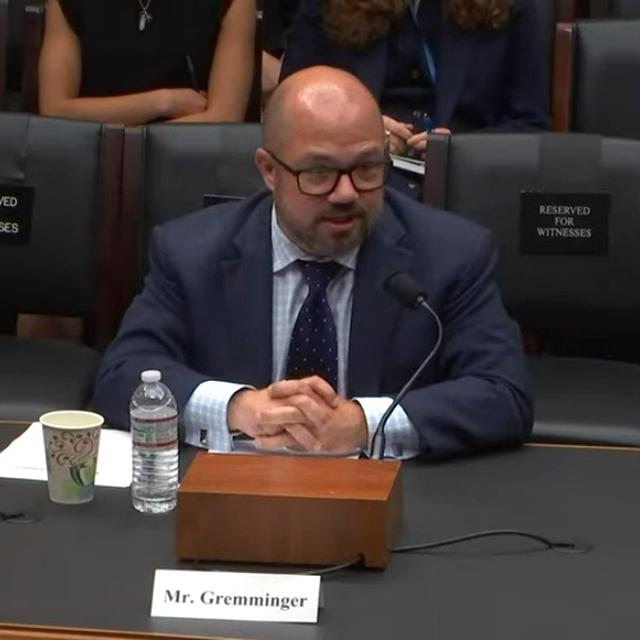
 Shawn Gremminger, CEO of the National Alliance of Healthcare Purchaser Coalitions, testified Wednesday at a hearing on health care cost transparency organized by the House Energy & Commerce's Health Subcommittee. Credit: House Energy & Commerce Committee
Many employers think they could do more to hold down spending at their health plans if they could get and analyze detailed, anonymized claims data.
One obstacle is a tendency for health insurers and self-insured plan administrators to use indirect methods to keep the claims data out of employers' reach, according to Shawn Gremminger, president of the National Alliance of Healthcare Purchaser Coalitions.
Gremminger, who leads an organization that represents employer-sponsored health plans and union plans with about 90 million participants, talked about the health plan data keepers' passive-aggressive approach to employer data requests Wednesday in Washington, at a hearing on health care cost transparency. The hearing was organized by the U.S. House Energy & Commerce Committee's Health Subcommittee.
When an insurer or third-party administrator gets an employer request for plan data, "rarely is it just a straight up no," Gremminger said. "It's often a, 'You know what we can provide, and, if you want to pay more, or you want to sue us, we'll provide more than that.'"
Some insurers and TPAs do simply refuse to provide data, but, much more often, they will put up less obvious barriers, he said.
In some cases, the data keepers will say they can provide only top-level summary data, Gremminger said.
In other cases, the data keepers say they can provide data only if they charge the employer a "substantial amount of money" for access to their own plans' data, he said.
Gremminger said his group supports the Patients Deserve Price Tags Act bill, which has six Republican cosponsors in the House and five Democratic cosponsors, because he believes provisions in that bill would help employers get plan data.
What it means: Many House members seem to like the idea of making it easier for employers to get anonymized health plan claims data.
The Turquoise perspective: Carol Skenes, chief of staff at Turquoise Health, a health care data transparency organization, talked at the hearing about the intentional and unintentional data problems that weaken the impact of existing federal health cost transparency rules.
Turquoise Health is famous for publishing tools that help consumers, employers, benefits advisors and others use the giant price files that health plans and hospitals now must post on the web.
Skenes said Congress should make some price transparency rules that are implemented in federal regulations and federal law, make providers other than hospitals post their prices, require providers to show what they charge self-pay patients and stop-loss issuers as well as what they charge patients with other types of health coverage.
The impact: House subcommittee members asked several times if existing health cost transparency requirements are doing much to help anyone hold down health care costs.
© Arc, All Rights Reserved. Request academic re-use from www.copyright.com. All other uses, submit a request to TMSalesOperations@arc-network.com. For more information visit Asset & Logo Licensing.