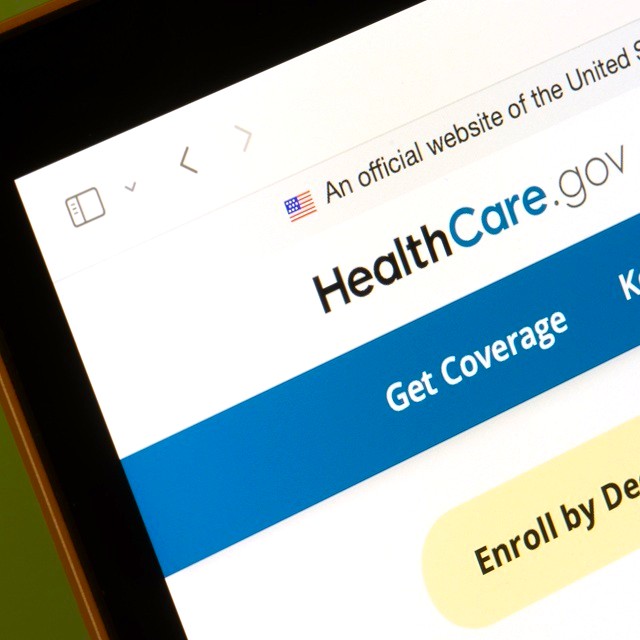
 An excerpt from the HealthCare.gov homepage. Credit: Tada Images/Adobe Stock
Health insurers want small employers to join the fight to keep the current federal premium tax credit subsidies for health insurance in place.
The current subsidy levels are set to expire Dec. 31.
Consumers can use the subsidies to pay for private health coverage purchased through HealthCare.gov or other Affordable Care Act public exchange programs. Most of the 24 million exchange plan users get individual or family coverage. But about 48% of U.S. adults under age 65 with individual or family coverage are self-employed, own small businesses, or work for businesses with fewer than 25 employees, according to KFF data cited by America's Health Insurance Plans.
AHIP, a trade group for health insurers, has been lobbying hard to keep the current premium subsidy levels in place. It has focused mainly on the impact expiration would have on individuals and families. Now, however, it's expanding its arguments and making the case that expiration would be bad for business.
"Congress must act as quickly as possible to extend the health care tax credits," AHIP said in a commentary posted today. "If Congress fails to extend the tax credits, small businesses may be forced to cut jobs, reduce hours, or close entirely as owners and employees lose access to affordable health care."
What it means: If employer groups help health insurers protect the current ACA premium subsidy levels, the employer groups may be able to get extra help from health insurance groups with lobbying for their causes.
The backdrop: The drafters of the Affordable Care Act originally held subsidy program costs down by making the subsidies available only to people with household income under 400% of the federal poverty level.
This year, that's $62,600 for an individual and $128,600 for a family of four.
When the COVID-19 pandemic hit, Congress put a higher level of subsidies in the American Rescue Plan Act.
Today, the subsidy level is higher than it used to be for people at all income levels, and people at any income level can qualify for some subsidy help if exchange plan premiums would eat up too much of their income.
Advocates for keeping the current subsidy levels in place argue that it's the right thing to do and helps keep uninsured people from developing seriously, easily prevented health problems.
Critics argue that many exchange plan users lie about themselves to qualify for high subsidy levels and that the subsidy system encourages insurers to increase their premiums to maximize subsidy revenue.
AHIP's perspective: AHIP predicted, based on analyses from KFF and the U.S. Treasury Department, that letting the premium subsidies fall back to pre-ARPA levels could cause out-of-pocket premium bills to rise 75% for many middle-income Americans.
About 82% of self-employed people and small business owners who have exchange coverage use premium tax credits to pay for their coverage, and eliminating premium subsidies for people with income over 400% of the federal poverty level could hit them hard, AHIP said.
If, for example, two married 60-year-olds who own a small business, have no children at home and have $85,000 in household income use ACA exchange plan coverage now, they may qualify for $18,000 in premium subsidies, according to KFF. Under the original ACA subsidy rules, the couple would get no help with paying for coverage.
© Arc, All Rights Reserved. Request academic re-use from www.copyright.com. All other uses, submit a request to TMSalesOperations@arc-network.com. For more information visit Asset & Logo Licensing.