This industry is no walk in the park, but people keep finding a reason to come back and fight the good fight. However, it's easy to get lost in all of the noise, not only in the industry but in your personal life as well. Rediscovering your purpose shapes your work and can lead to unexpected paths that help you focus on what matters the most.
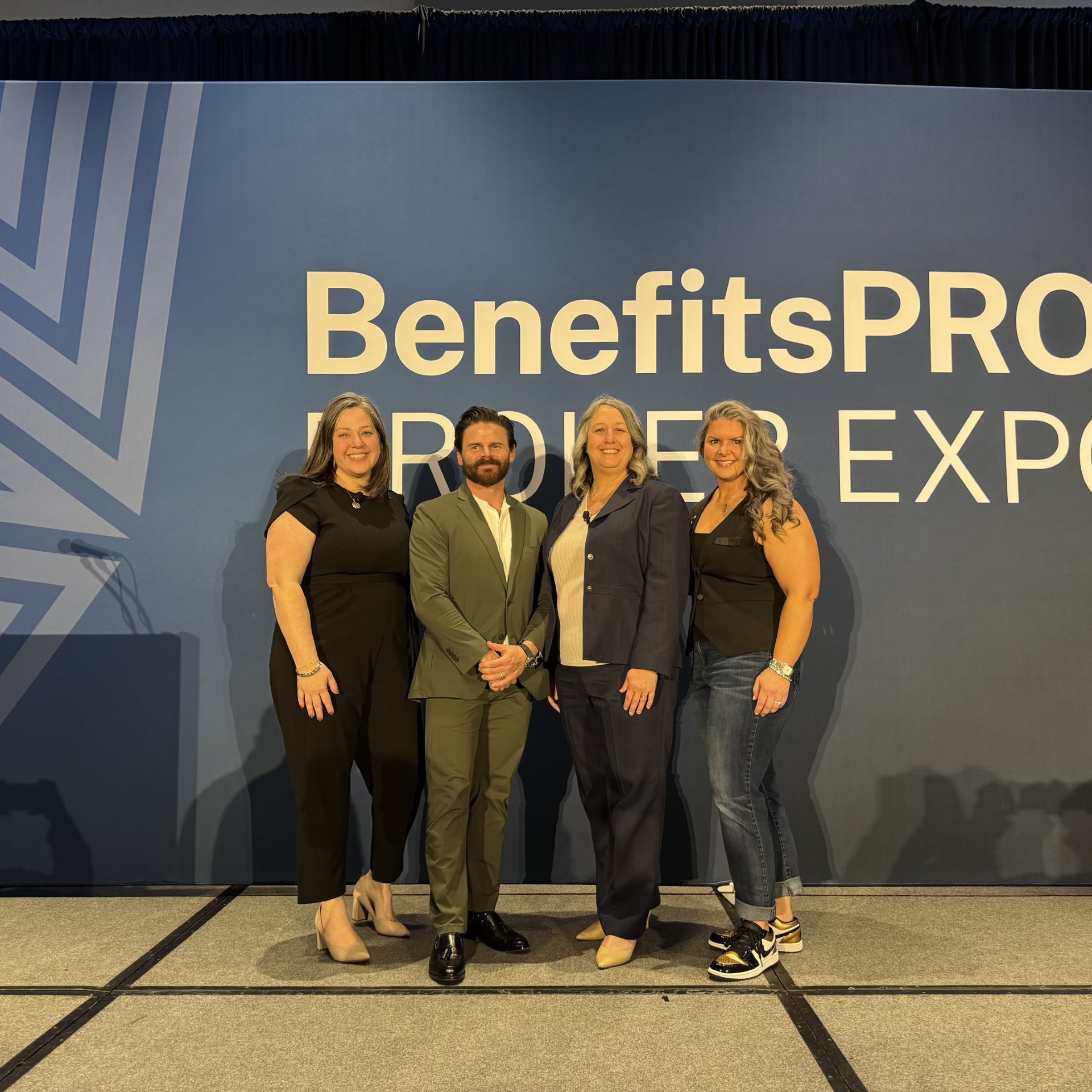
At this year's BenefitsPRO Broker Expo, four industry leaders shared their stories about rediscovering their purpose and what led them to that.
Reinventing yourself
Like many people in the field, Donovan Ryckis didn't set out to become an employee benefits advisor. At 24 and entering the financial industry, he imagined something more exciting. "I saw an industry with no ceiling," he recalled. "I could work with any type of client I wanted to, solve any type of problem I wanted to. I just didn't know what it would be."
Like most people in their 20s discover, you start at the bottom and work your way up. His first job was selling Medicare plans to seniors: knocking on doors and cold-calling. The money was good, and eager to advance, Ryckis invested his time in learning the industry.
"There were 39 Medicare supplement plans in Florida, and the one I was selling was the 38th most expensive."

That became the first crossroads in his career: he set aside the book of business he'd built and went independent. He felt better about the work, but it came with a trade-off. "My $630 commission turned into $125," Ryckis said. "The best products pay the worst commissions, and the worst products pay the best."
He kept expanding, hosting educational sessions that attracted larger groups of potential clients. and deepening his expertise. Eventually, he moved into life insurance and retirement products and earned his Series 65 certification. As an independent registered investment advisor, he was pulling in six figures a month, but there was a catch.
"If at any point I stopped, the revenue stopped as well," he recalled. "And because I was working with business owners, they would call me Friday night or Sunday morning."
Then came another fork in the road. "A client asked me about health insurance," he said. "He called me panicked — his broker said he was paying 40% more. I told him to send me everything he had."
Ryckis applied the same intensity he'd used throughout his career, immersing himself in health insurance and building his first self-funded plan. "I was looking at it and thinking, 'Wow, I just made an impact on a lot of families.'"
Once again, he reinvented himself — this time around a purpose closer to what his younger self envisioned. "I wanted to impact average Americans' daily lives," he said.
That new direction also brought his wife and business partner, Chelsea, into the picture. Together, they built Ethos Benefits and continue to refine it. "We started to describe what our agency is — what we believe, our brand story," he said. "We started to attract higher-quality employees. We brought in the right people, and our organization started to change. We're constantly rediscovering."
Was it worth it?
While Ryckis took a somewhat winding path into the benefits industry, Jenni Jimenez has been entrenched in it for more than 20 years, which, in some ways, can make a major change even harder.
She started as a receptionist, taking on more roles as the business grew. "I became the executive assistant, then account manager, account executive, eventually a broker," Jimenez told the audience.
"Knowing every aspect of each one of those roles helped us grow in the community," she continued. But then her partner decided to sell the agency, and their two-person staff became 25. Jimenez looked forward to having more resources and support... but so was everyone else.
"The agency that acquired us was very much in a growth spurt," she said. "All those other people were hoping for the same things I was hoping for: more resources."

Over time, Jimenez began to feel the weight of the increased workload, limited resources, and misaligned priorities. The stress didn't go unnoticed by her clients, either. "The feedback I started to receive was that clients weren't feeling the love, and they weren't feeling the value."
Jimenez realized she had gotten so caught up in the transactional model the executive team wanted that she'd lost sight of her true focus. "Where I found a lot of my bread and butter was with those relationship-based clients."
After 18 years, she knew it was time for a change. She left and joined a local competitor (John Joe Insurance Agency), leaving behind her entire book of business and starting fresh. "They aligned with the relationship-driven approach," she said. "I knew I was going to have autonomy—be able to rebuild my intentions and refocus on my why."
Was it worth it? "I rediscovered the love for my job almost immediately," she said. "The responsiveness from prospects became different. The connection I had with those clients and the community was back."
Finding purpose
Like many in the health care and benefits industry, Erin Issac has an "origin story" that lead her to be where she is. She started out her BEN Talk by stating that her parents had the single greatest influence on her life. Issac then said "my mom was misdiagnosed, 6 months after I was born, with Lupus. And later found out she had rheumatoid arthritis."
The doctors said she had one of the most severe cases they have ever seen. However, Issac's mom never let the diagnosis define her.
Issac's dad was a stable provider and a caretaker. He worked 50 years at the same company and worked well into his 70s so that Issac's mother could keep good health insurance and be taken care of.
"We all have origin stories. Some of us got into this agency because we saw the mess of what health care was. Other people got into this industry because someone told us we could make money. But somewhere along the way we stumbled into our purpose," Issac said. Surprisingly, Issac confirms her reason for joining the industry is the latter.
She started in the industry the year the ACA was enacted which leveled out the playing field. Between industry veterans and newbies, no one had any idea what was happening.

"My purpose at this time was to find a career. This was it. This was going to be my 'I'm going to be here for three or four or five decades like my dad'," she said.
With insane year-over-year increases, Issac felt disheartened and felt like there was something better out there for her. At the same time, she had gotten married and she had her first son.
"I longed for something that looked a little bit more like my family. I wanted to build something that I could create and build alongside them and reflect them," she said.
Fortunately, Issac got that chance through an offer on LinkedIn. The key difference was that she had the opportunity to build benefits from scratch. However, 2020 hit.
"It was the year our worlds fell apart. Only for me, that year was 2021. It was the year of the before and the after. This is when you have the divide where you will never get back to the before. You have to live in the after," Issac said.
Issac's mother became sicker and sicker. She went through a triple bypass, a pacemaker replacement and ended up in congestive heart failure. And Issac was there through all of it supporting her mother. To add to it, Issac was in her third trimester with her second child and still growing her benefits practice, which was going through big changes.
At 39 weeks pregnant, Issac's entire family surrounded her mom in the ICU but Issac couldn't be there to say goodbye in person. Four days later, she went into labor and in-between contractions, she watched her mother's memorial service over Zoom.
When Issac went back to work after maternity leave, she was told she needed to hand over he biggest accounts to the new VP.
"Somewhere in this balance of losing my mom, having my son, and watching my job slip away, I nearly lost my faith and I most assuredly lost my purpose," Issac said. "I really, really asked the question: 'If we're just going to lose it all, what is any of this for?' There has to be something more."
That's where duality comes in. "In human practice, this looks like being able to hold two opposing truths," Issac said. It's being able to hold onto the profound grief of losing her mother, while also holding onto her bundle of joy, AKA her newborn son.
"It's being frustrated in our industry but also holding onto hope that we can actually do something better, something more," Isaac said.
While trying to rediscover her purpose after all this loss, Issac joined the carrier side. While it may sound crazy, she did rediscover part of her purpose through finding out what she didn't want to do. She decided there has to be something more.
"I wanted to be honest and give people hope. I wanted to bring people joy in this time," Issac said. From that, she started Joy Benefits.
Issac shared, when looking for something more:
- You will never be satisfied. "It means there is always one step further."
- You might be a little difficult to work with "when you are always looking for something more."
- Your efforts will feel futile at times.
"We have to keep moving forward and believing that there is something more and take other people along with you," she said to end the talk.
Evolution of a Wonder Woman
Somewhere along the way, Susan Combs got labeled as a Wonder Woman. Maybe it started when she was six years-old in her Wonder Woman costume, but maybe it started later in life.
Combs has absolutely embraced this title and has built a brand around it. She has a monthly column on BenefitsPRO, highlighting the Wonder Women in this industry.
"We strive to build a community around it and really embrace it… but it can look like a highlight reel from the outside, but they truth is, most of the women we know don't feel like Wonder Woman when they are becoming her," Combs expressed.
Combs explained that the evolution of becoming a Wonder Woman doesn't look like strength, it can look like doubt.
"It looks like saying 'yes' when you should've said 'no'. It looks like carrying things that were never yours to carry. It looks like 'It's fine, everything is fine' all while you are doing it," Combs said.
The world love to hand out the title of Wonder Woman, Combs shared. "Because it sounds great. But what does that really look like?" Combs asked.
The thing Wonder Woman don't ask is "Is this mine to carry?".
"We don't ask about the cost of carrying everything. It has a massive price," she said.

About 12 years ago, she was asked to write a monthly column by Paul Wilson. The topic would constantly change. However, Wilson, in what Combs described as a moment of weakness, tells Combs that he just wanted to hear something good that is happening in this world. From that conversation, What's the good news ladies? (which is now Wonder Women) was born.
The series is about giving these women a spotlight when they may have not had a spotlight.
At the time, Combs didn't realize she was rediscovering her purpose. She felt like she still had something to prove. "I felt like I was still proving that I deserved a seat at the table," Combs shared.
But, proving has a cost. "No matter how much you achieve or how you look on paper, it never feels like it's enough," she said.
Everything changed when Combs lost her father who was a Major General. "He was my biggest supporter," she said.
The day after she lost her father, Combs went to the gym in her small hometown. She was walking back when she heard clanging and she decided to look up. The post office in her town placed the flag at half-mast for her father. Standing in awe, Combs decided it wasn't about the titles and the accolades. It was about the impact being made on people's lives.
"It caused me to look at things differently," Combs said. "It turned into asking 'what actually matters?'". Loss forces you to get quiet and get honest with things.
For Combs, it turned into helping veterans.
On his death bed, Combs' father was on feeding tubes and oxygen and had asked for pancakes. Clearly, that was not possible, but pancakes turned into a sign and a symbol of her father and everything he did.
Combs used this symbol to create Pancakes for Roger, a nonprofit that honors veterans and amplifies their stories. As a result, she has brought in over $21 million.
"Loss gives you perspective like nothing else," Combs said. "I had stopped doing things that look good on paper, and I was doing things that impacted me."
"I was never taught to stay in my lane. So, when someone compares me to Wonder Woman, I smile. Because I know it's not about the title. It's about the impact," Combs said.
"You don't become her all at once. You choose her."
© Arc, All Rights Reserved. Request academic re-use from www.copyright.com. All other uses, submit a request to TMSalesOperations@arc-network.com. For more information visit Asset & Logo Licensing.